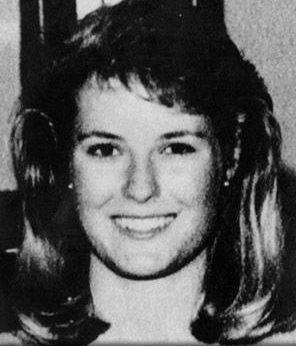
Danny Katz was a 14-year-old Israeli boy who lived in the Denia neighborhood of Haifa. On Thursday, 8 December 1983, he left home to visit a friend and disappeared on the way. After a three-day search, his body was found outside a remote cave in the Sakhnin region, bearing marks of strangulation, torture, and sexual assault. The killing has been characterized as a terrorist attack and placed among a series of attacks directed at Israeli children in the early 1980s, deepening public concern about personal security at the time.
Investigators traced the case through a letter found in a pile of garbage near the cave, which led them to Samir Ghanem, a resident of Sakhnin. Ghanem first denied any involvement but later confessed and named additional men, among them Fathi Janameh, Ali Ganayem, and Atef Sabihi. According to the account, all admitted to killing Katz. Five men were ultimately found guilty of murder and sentenced to life imprisonment. One of them, Atef Sabihi, later also confessed to the 1982 abduction, rape, and murder of 19-year-old Daphna Carmon.
The convictions were contested for years. The defendants' attorney, Avigdor Feldman, argued that they rested solely on confessions the defendants said had been given under duress, and that solid corroborating evidence was lacking. In 1991 the Israeli Supreme Court found those claims not credible and held that the confessions, together with additional evidence, were sufficient to sustain the convictions.
Amid continued public pressure, Justice Minister David Libai asked attorney Judith Karp to prepare a report on the case. An application for a retrial followed, and in 1999 Supreme Court President Aharon Barak ordered that one be held, a relatively rare step in the Israeli legal system. The retrial began in 2000, and in 2002 the defendants were convicted again after the court found their confessions admissible. A further appeal by Feldman was unanimously rejected.
In 2007 President Shimon Peres issued a pardon that reduced the men's sentences, giving them the option to ask the prison parole board to deduct a third of their terms. In July 2008 the parole board rejected that request, citing continued danger to the public. Three of the men were released from prison in January 2017. The remaining two, who were also charged in the Carmon case, were reported as expected to be released in 2029.


 Credit: B. ŽelezníkPublic domainSourceSOLVEDListen