Nancy Violet Evans Titterton was born in Ohio in 1903 and moved to New York, where she worked for the New York Post in the late 1920s. There she met Englishman Lewis Henry Titterton, whom she married in 1929. Her husband rose to become an executive at the National Broadcasting Company, and the couple lived in an apartment near the East River in Manhattan. Nancy pursued a writing career; her work "I Shall Decline My Head" appeared on the cover of the August 1935 issue of Story Magazine, and in 1935 she received a book deal following publication of a short story. By 1936 she was preparing to write her first novel.
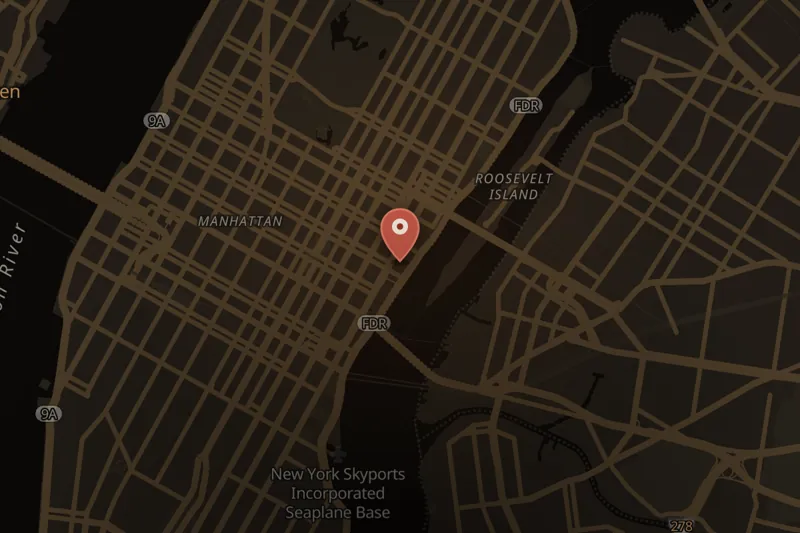
On the morning of April 10, 1936, 34-year-old Nancy Titterton was killed inside her apartment at 22 Beekman Place. Her body was discovered that afternoon by Theodore Kruger and John Fiorenza, two furniture repairmen delivering a couch that had been reupholstered. She was found in a bathtub, having been raped and strangled to death.
The crime scene yielded little physical evidence beyond a 13-inch piece of cord and a single hair recovered from the bed. Investigators initially dismissed the hair as belonging to the victim, but further examination revealed it was horsehair, a material used as stuffing in upholstery. The case, quickly dubbed by the press as the Beekman Place "Bathtub Murder," attracted extensive media coverage.
The case was solved when Alexander Gettler, a scientist at the Office of Chief Medical Examiner of the City of New York, traced the horsehair to a local upholstery shop that had recently serviced furniture in the Titterton apartment. That shop was owned by Theodore Kruger, one of the men who had discovered the body, with John Fiorenza working there as an assistant. The horsehair evidence led police to focus suspicion on Fiorenza, an ex-convict, who subsequently confessed to the crime.
Fiorenza stood trial for the murder, which concluded on May 28, 1936, after a jury deliberated for 19 hours before returning a guilty verdict. He was sentenced to death and held at Sing Sing prison. Fiorenza was executed in the electric chair on January 22, 1937.
The case is noted as an early instance of a homicide solved through forensic trace-evidence analysis, specifically the microscopic identification and sourcing of a single hair fiber.


 SOLVEDListen