Robbery and Murder
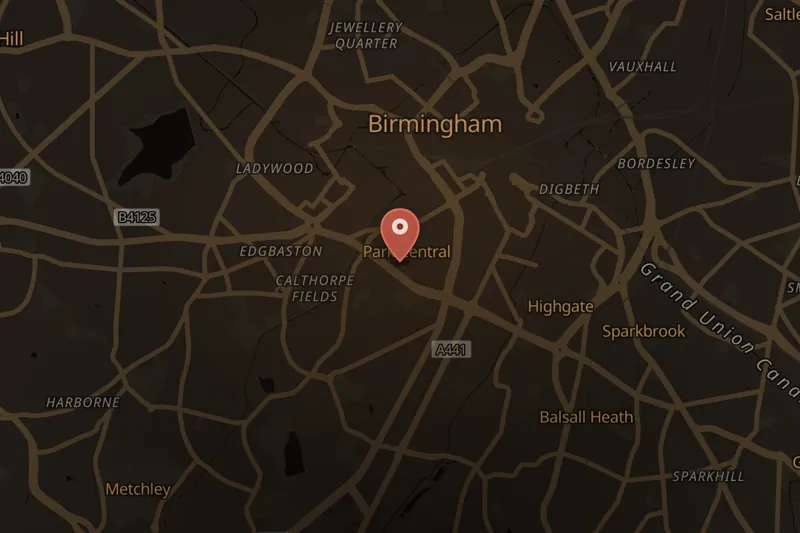
Thomas Arthur Bates, aged 46, ran a newsagent's shop at 196 Lee Bank Road (now Lee Bank Middleway) in the Edgbaston district of Birmingham, England. At 6:30 pm on Saturday, 2 June 1962, a 19-year-old Jamaican baker named Oswald Augustus Grey, of Cannon Hill Road, carried out a robbery at the shop, during which he shot Bates in the upper chest. Grey then fled the scene on a number 8 (Inner Circle) bus.
Bates' mother, who had been in the living quarters at the back of the shop, heard the shot and found her son collapsed on the floor. Believing he had suffered a heart attack or stroke, she did not initially realise he had been shot. He was reportedly dead before reaching the city's General Hospital, where it was only then discovered that he had been shot; the bullet had passed through his heart, lungs and liver.
Investigation, Conviction and Appeal
The Birmingham City Police investigation was led by Detective Chief Superintendent Gerald Baumber. Investigators quickly suspected a robbery after finding an empty cash tin, a bullet hole in the wall behind the counter, and a spent cartridge. Birmingham CID circulated a description of a black man seen outside the shop at the time of the murder. Four days later, during a dawn police sweep of homes in Ladywood and Edgbaston, several men were arrested, including Grey.
Grey was questioned and, on 7 June, was brought before magistrates charged with stealing a pistol and ammunition from a 60-year-old Handsworth man, Hamilton Bacchus. Grey admitted stealing the gun but denied shooting anyone. The following day he was charged with murder after an identification parade at which a witness, Cecilia Gibbs, identified him once the men in the parade tilted their hats, as the suspect had done.
At his trial at Birmingham Assizes before Mr Justice Paull, Grey maintained his innocence, claiming he had sold the gun at a party for £16. Four women testified that he was not the person they had seen at the scene, and it was alleged that police had coerced a confession from him by force, an allegation the police denied. On 13 October 1962, following jury deliberation of just 50 minutes, Grey was convicted and immediately sentenced to death.
Grey's solicitor, F. G. Owen, filed an appeal within days, arguing the evidence was insufficient to support a guilty verdict and death sentence. The Court of Criminal Appeal, comprising Lord Chief Justice Lord Parker of Waddington, Mr Justice Gorman and Mr Justice Salmon, dismissed the appeal on 29 October 1962.
Execution
Grey was hanged at Winson Green Prison on Tuesday, 20 November 1962, by executioner Harry Allen and an assistant. He became the last person executed at that prison and in the city of Birmingham. Present at the execution were prison governor John Richards, prison doctor Dr P. M. Costa, and eight uniformed officers and plain-clothes detectives. A protest against the death penalty took place outside the prison at the time of the execution.

 SOLVEDListen