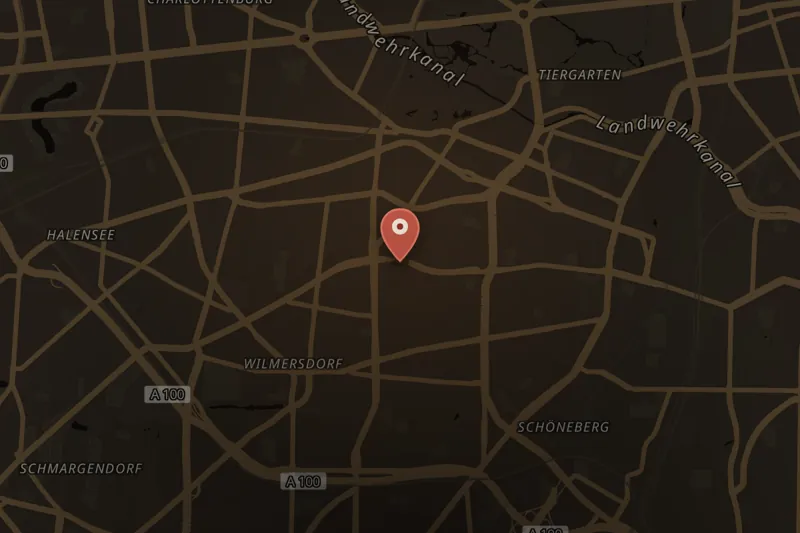
On the night of 17 September 1992, four men were shot at the Mykonos Greek restaurant on Prager Strasse in Berlin, Germany. The victims were the Iranian-Kurdish opposition figures Sadegh Sharafkandi, Fattah Abdoli and Homayoun Ardalan, together with their translator, Nouri Dehkordi. According to contemporaneous reporting, the attack took place at about 11 p.m.; three of the victims died at the scene and the fourth died later in hospital. The killings occurred during the KDPI insurgency of 1989-1996, a period of Kurdish separatist conflict in Iran, and the men were associated with the Kurdistan Democratic Party of Iran.
The restaurant had also been the planned venue for a meeting involving senior figures from the Swedish Social Democratic Party, among them a former prime minister of Sweden. The Swedish party members had left Berlin for Sweden earlier the same day after a telephone call urged the former prime minister's immediate return, and they were not present when the shooting took place. Three of the victims, Sharafkandi, Abdoli and Ardalan, were later buried at the Pere Lachaise Cemetery in Paris.
A trial opened before the Berlin court in October 1993. The court found several defendants guilty of the murders, including Kazem Darabi, an Iranian who worked as a grocer in Berlin and was described as an employee of Iran's intelligence service; Abdolraham Banihashemi, identified as an Iranian intelligence officer; and Abbas Hossein Rhayel, a Lebanese national. Those defendants were sentenced to life imprisonment. Two further Lebanese nationals, Youssef Amin and Mohamed Atris, were convicted as accessories to murder.
During the proceedings, a former president of Iran who had left the country in 1981 testified that the killings had been ordered at the highest levels of the Iranian state. In its ruling of 10 April 1997, the court concluded that the assassination had been ordered by Iran's intelligence minister, Ali Fallahian, and issued an international arrest warrant for him, adding that the operation had been carried out with the knowledge of Iran's most senior political leadership. The finding prompted a diplomatic crisis between Iran and several European governments that continued until November 1997. Despite international and domestic protests, Darabi and Rhayel were released from prison and deported to their home countries on 10 December 2007. The events and the subsequent trial were later recounted in a 2011 non-fiction book by Roya Hakakian, Assassins of the Turquoise Palace.

 Credit: Mutter ErdeCC BY-SA 4.0SourceSOLVEDListen


