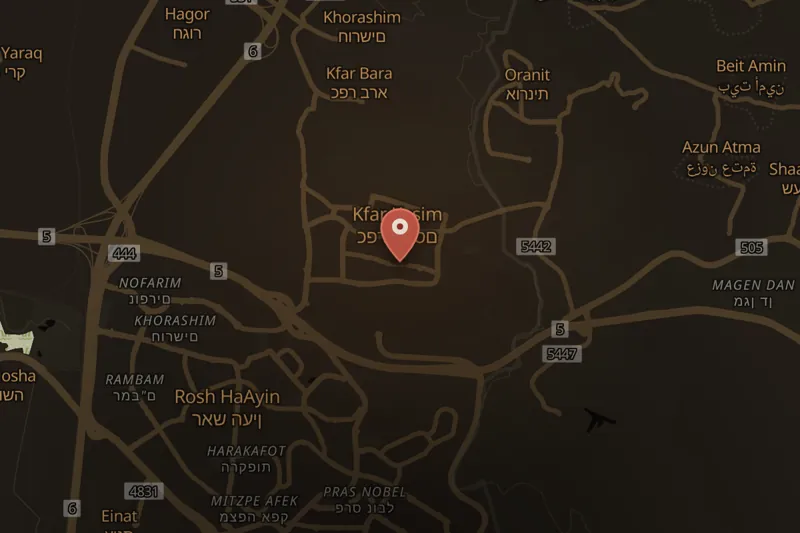
The Qibya massacre took place on the night of 14 October 1953, during an Israeli reprisal operation known as Operation Shoshana. Israel Defense Forces troops, including soldiers from the newly formed Unit 101 commanded by Major Ariel Sharon, attacked the village of Qibya in the West Bank, then under Jordanian control. Estimates of the attacking force range from roughly half a battalion to as many as 250–300 soldiers according to the Mixed Armistice Commission's report to the UN Security Council. More than 69 Palestinian civilians were killed, the majority of them women and children. Forty-five houses, a school, and a mosque were destroyed. Israeli troops used Bangalore torpedoes to breach village defenses, mined roads to block Jordanian reinforcements, and mortared both Qibya and the neighboring village of Budrus. Military engineers dynamited numerous buildings, in some cases with residents still inside. Sharon later wrote in his diary that "Qibya was to be an example for everyone" and that he had ordered "maximal killing and damage to property." Post-operational reports described soldiers breaking into houses and clearing them with grenades and gunfire.
The raid was presented by Israel as retaliation for an attack on 12 October 1953 in the Israeli town of Yehud, in which Suzanne Kinyas and her two children were killed by a grenade. Jordanian officials disputed Israel's characterization of the perpetrators and offered to cooperate in an investigation; a subsequent joint UN-Jordanian investigation into a separate incident found tracks leading toward the Israeli side of the border, but Israel did not allow the investigators to pursue this further. The Qibya attack occurred amid a broader pattern of cross-border incidents, punitive Israeli operations against other West Bank villages, and disputed casualty figures from both Israeli and Jordanian sources over the preceding years.
The Mixed Armistice Commission held an emergency session on 15 October 1953 and passed a resolution condemning the Israeli army's action as a breach of the Israel-Jordan Armistice Agreement. The UN Security Council subsequently adopted Resolution 100 on 27 October 1953 and Resolution 101 on 24 November 1953, the latter expressing the "strongest possible censure" of the action. The U.S. State Department called the raid "shocking" and confirmed that economic aid to Israel had been suspended, citing separate non-compliance issues related to the Demilitarized Zone.
Israeli officials initially denied that the regular army had been involved, with Prime Minister David Ben-Gurion publicly stating that the attack had been carried out by civilian border settlers. Historian Avi Shlaim later wrote that this official version was not believed and did not reduce damage to Israel's international image. Sharon was not prosecuted despite U.S. calls for accountability, though Unit 101's independent status was revoked and the unit was later dismantled. According to Daniel Byman, the attack led Jordan to arrest more than a thousand fedayeen and increase border patrolling, resulting in a temporary reduction in cross-border incursions.

 Credit: Israel PoliceCC BY-SA 3.0SourceSOLVEDListen