Casepin
Back to cases

Case file

Rua do Arvoredo murders

Illustrative

The Rua do Arvoredo murders were a series of killings that took place between 1863 and 1864 in Porto Alegre, Brazil. The perpetrators — José Ramos, a former police inspector and informant; his wife, Catarina Palse, a German immigrant from the Hungarian part of Transylvania; and Carlos Claussner, a German immigrant butcher — targeted predominantly German immigrants. Palse, who spoke little Portuguese, would seduce and lure victims to appointments, drawing them to the couple's residence on Rua do Arvoredo, where Ramos killed and dismembered them. According to testimonies from the period, Claussner had suggested processing the remains into sausages sold at his butcher shop as a means of destroying evidence.

In August 1863, a wave of disappearances caused public panic and pressure on local authorities. Fearing exposure, Claussner reportedly planned to flee to Uruguay, prompting Ramos to kill him as well and hide his body in the couple's backyard. Ramos and Palse then took over Claussner's shop, though the business soon failed due to their lack of experience running it.

The case unraveled in 1864 following the disappearances of traveling salesman José Ignacio de Souza Ávila and Portuguese merchant Januário Martins Ramos da Silva, both last seen at Ramos' house. A police search of the property uncovered decomposing human remains in the basement, later identified as Claussner's, and the mutilated bodies of Januário and José Ignacio in a well. Palse, already arrested on other charges, confessed that six men had been killed at the house and that their bodies had been processed into sausages by Claussner. Her account reportedly became a starting point for further investigation into the killings.

At trial, Delegate Dario Rafael Callado — who had employed Ramos as a police informant and reportedly expedited proceedings to avoid embarrassment — presided over Ramos' conviction on multiple counts of robbery and murder. Ramos was sentenced to death by hanging, later commuted to life imprisonment; he denied the crimes until his death in 1893 at a Porto Alegre hospital. Palse was convicted as an accomplice and sentenced to 13 years' imprisonment; a report from May 1891 indicated she had been released after completing her sentence.

Historian Décio Freitas, who researched the case for his 1996 book on the killings, noted that documentation is incomplete — several trial pages were lost, and surviving records are written in archaic Portuguese — and stated that the extent to which the sausage-making detail can be definitively proven was undermined during the trial and over time. The case, while historically documented, has also become the subject of local legend and inspired several books, documentaries, and a 2006 televised dramatization.

Key facts

Victims
Carlos Claussner, Januário Martins Ramos da Silva, José Ignacio de Souza Ávila
Date
1857
Location
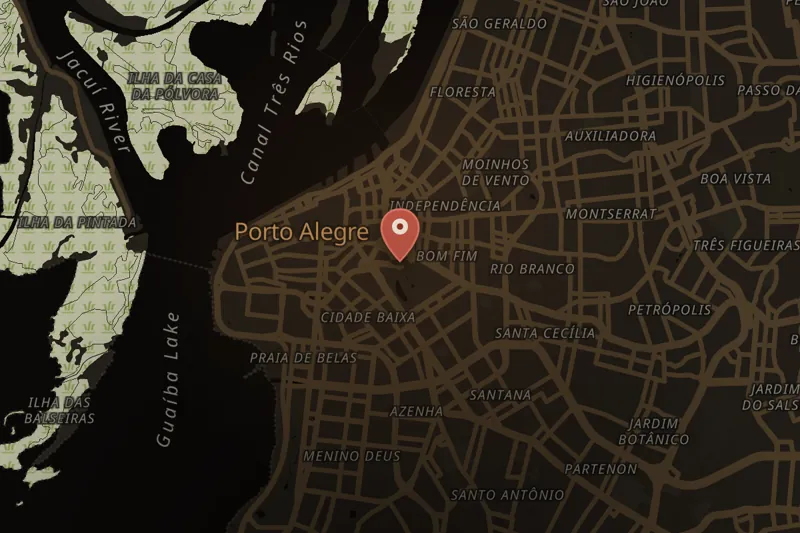
Rua Coronel Fernando Machado (formerly Rua do Arvoredo), Porto Alegre, Brazil
Case status
solved

Case timeline

  1. 1857

    Catarina Palse arrives in Porto Alegre, Brazil, at age 20.

  2. 1859

    Carlos Claussner arrives in Brazil and opens a butcher shop in Porto Alegre.

  3. 1862

    José Ramos is expelled from the police force after attempting to behead a captured bandit, Domingos José da Costa.

  4. 1863

    José Ramos and Catarina Palse become involved and move in together on Rua do Arvoredo; the murders begin.

  5. 1863-08

    A wave of disappearances causes public panic in Porto Alegre, prompting authorities to investigate.

  6. 1864

    Disappearances of José Ignacio de Souza Ávila and Januário Martins Ramos da Silva lead to a police search of Ramos' house, uncovering human remains; the crimes are uncovered and Catarina Palse confesses.

  7. 1891-05-06

    It is reported that Catarina Palse has been released after fully serving her 13-year sentence.

  8. 1893

    José Ramos dies at the Santa Casa de Misericórdia Hospital, having denied his crimes until death.

  9. 1996

    Historian Décio Freitas publishes 'The Greatest Crime on Earth - The Butcher on Rua do Arvoredo' after researching the case.

  10. 2006-04-28

    Rede Globo airs an episode of Linha Direta dramatizing the case.

Best coverage

No approved coverage links are attached yet.

People

  • Carlos Claussner

    VICTIM

    German immigrant butcher and alleged co-conspirator who was ultimately killed by José Ramos out of fear he would inform police.

  • Catarina Palse

    CONVICTED

    Convicted as an accomplice; sentenced to 13 years' imprisonment; reported released in 1891 after serving her sentence.

  • Januário Martins Ramos da Silva

    VICTIM

    Portuguese merchant killed after his disappearance helped uncover the crimes.

  • Dario Rafael Callado

    LAW ENFORCEMENT

    Police Chief and Justice/Delegate who presided over the investigation and trial; had employed José Ramos as a police informant.

  • José Ignacio de Souza Ávila

    VICTIM

    Travelling salesman killed after his disappearance helped uncover the crimes.

  • José Ramos

    CONVICTED

    Convicted of multiple counts of robbery and murder; sentenced to death, commuted to life imprisonment; died in custody/hospital in 1893 while denying the crimes.

Roles reflect public records and court outcomes at the time of writing — supporting citations are on file under Sources.

Places

Common questions

What happened to the victim?
Between 1863 and 1864, José Ramos, his wife Catarina Palse, and butcher Carlos Claussner lured predominantly German immigrants to a house in Porto Alegre, Brazil, killed them, and allegedly turned their remains into sausages sold at a local butcher shop.
Where did the murders happen?
Rua Coronel Fernando Machado (formerly Rua do Arvoredo), Porto Alegre, Brazil.
Who was convicted?
Catarina Palse (Convicted as an accomplice; sentenced to 13 years' imprisonment; reported released in 1891 after serving her sentence.) and José Ramos (Convicted of multiple counts of robbery and murder; sentenced to death, commuted to life imprisonment; died in custody/hospital in 1893 while denying the crimes.).
What is the current status of the case?
Status: solved.

Sources

  1. Rua do Arvoredo murderswikipedia · Wikipedia · 2026-07-07
  2. Contemporaneous coverage — justificando.comnews · justificando.com · 2026-07-07
  3. Contemporaneous coverage — www1.folha.uol.com.brnews · www1.folha.uol.com.br · 2026-07-07