

Start here
Japan's Dark Secret | The Disturbing Case Of Satoshi Uematsu | Sagamihara Massacre

Coffeehouse Crime's 24-minute breakdown, the fullest single telling on file.
Watch on YouTubeBefore you continue
This case involves crimes against children. Casepin presents the record in neutral, non-graphic language. Choose whether to continue.
Solved case · 2016
Also known as Sagamihara massacre
The short answer
On 26 July 2016, a former employee stabbed 19 residents to death and injured 26 others at a care facility for people with disabilities in Sagamihara, Japan; he was sentenced to death in 2020.
Start hereJapan's Dark Secret | The Disturbing Case Of Satoshi Uematsu | Sagamihara MassacreCoffeehouse Crime · 24 minThe coverage index
1 piece from 1 creator: ranked, with duplicates removed and short clips set aside.
Start here
Video · YouTube · 24 min · 2021
Coffeehouse Crime's 24-minute breakdown, the fullest single telling on file.
Watch on YouTubeTitles and descriptions are the creators’ own and may not reflect current legal status. The sourced facts are in the file below. Players load only when you press play. Suggest coverage we’re missing.
The case file
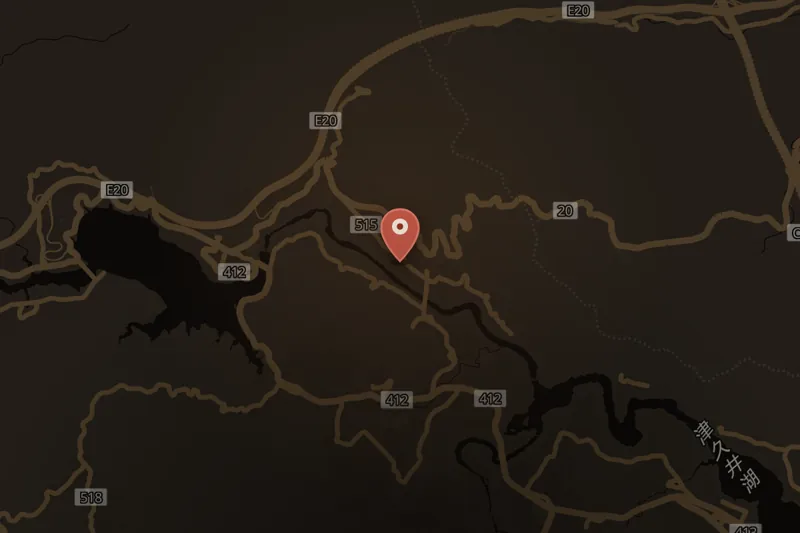
In the early hours of 26 July 2016, a man broke into Tsukui Yamayuri En, a residential care facility for people with intellectual and physical disabilities in Midori Ward, Sagamihara, Kanagawa Prefecture, Japan. Using a hammer to smash a window, he entered the facility carrying a bag containing five knives, a hammer, and cable ties. Over the course of roughly an hour, he moved between the facility's residential wards, tying up staff members, questioning them about which residents could speak, and stabbing residents he believed could not communicate, primarily targeting their necks, chests, and torsos as they slept. Nineteen residents, aged between 18 and 70, were killed, and 26 others were injured, 13 of them severely. Staff members in several wards attempted to alert police during the attack, including one who sent text messages by typing with his toes after his hands were bound. Police received their first call at approximately 02:38, but the attacker had left the premises by 02:48. He was arrested after turning himself in at a nearby police station at 03:05 with a bag of bloodstained knives.
The man responsible, identified as Satoshi Uematsu, a 26-year-old former employee of the facility, had worked there from December 2012 until resigning in February 2016. Months before the attack, in February 2016, Uematsu had attempted to deliver a letter to the Speaker of Japan's House of Representatives calling for the legalized euthanasia of people with multiple disabilities, with the consent of guardians, describing such killings as being "for the sake of Japan and world peace." After the letter came to the attention of local authorities, he was involuntarily committed to a psychiatric hospital for two weeks but released on 2 March 2016 after doctors assessed he was not a threat.
Uematsu was found mentally competent to stand trial in February 2017 and was formally charged in February 2019 with 19 counts of murder, 24 counts of attempted murder, and additional charges including illegal confinement and unlawful entry. Although his defense initially indicated it would argue diminished capacity due to marijuana use, Uematsu stated in December 2019 that he intended to admit to the crime. He pleaded not guilty in January 2020, but on 16 March 2020 the Yokohama District Court sentenced him to death after prosecutors sought the maximum penalty. Uematsu did not appeal, and the sentence was finalized on 30 March 2020. A subsequent request for a retrial, filed in April 2022, was dismissed in April 2023.
Japanese officials, including then-Chief Cabinet Secretary Yoshihide Suga, described the attack as shocking, and the government pledged to review measures to prevent similar incidents. Some Japanese news outlets characterized the attack as a hate crime. The original care facility building was demolished, while the administration building and gymnasium were left standing; a new facility comprising two buildings opened in July 2021.
12 dated entries · 2016–2023
Satoshi Uematsu attempts to deliver a letter to the Speaker of Japan's House of Representatives calling for legalized euthanasia of people with multiple disabilities.
Uematsu is involuntarily committed to a psychiatric hospital after his letter is brought to authorities' attention.
Uematsu is released from the psychiatric hospital after being assessed as not a threat.
Uematsu breaks into Tsukui Yamayuri En care facility and kills 19 residents and injures 26 others.
Uematsu is found mentally competent to stand trial.
Uematsu is formally charged with 19 counts of murder and other offenses.
Uematsu pleads not guilty to the stabbings.
Uematsu is sentenced to death by the Yokohama District Court.
Uematsu's death sentence is finalized after he withdraws his automatic appeal.
A new facility of two buildings opens at the site.
Uematsu appeals for a retrial.
Uematsu's retrial request is dismissed.
1 named in this file
Victims first. Every legal label is set from public records and court outcomes, not from the prose.
Former employee of the care facility; convicted and sentenced to death for 19 counts of murder and 24 counts of attempted murder among other charges.[3]
From the record
3 cited
Coverage is not a source: every fact in this file rests on the records below.
PressThe GuardianAccessed Jul 7, 2026
PressBBC NewsAccessed Jul 7, 2026
EncyclopedicWikipediaAccessed Jul 7, 2026
Trust
Are you family of someone named in this file? Corrections and removal requests from victims’ families are prioritized.
Near this case
 SOLVEDListen
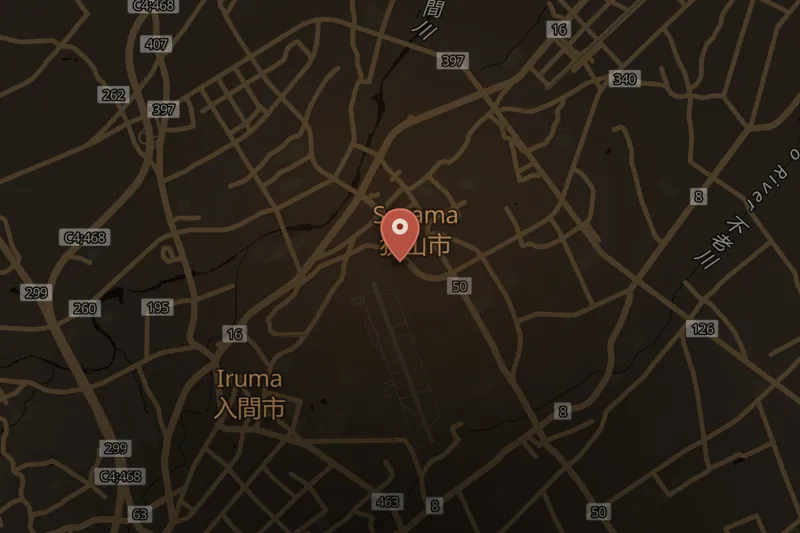
Sayama, Saitama, Japan · 1960s
Sixteen-year-old Yoshie Nakata was kidnapped, raped, and murdered in Sayama, Saitama, Japan in May 1963; Kazuo Ishikawa, a burakumin farm worker, was convicted and imprisoned for 31 years in a case that remains disputed and tied to allegations of caste-based discrimination in Japan's justice system.
 Credit: 松竹キネマ·Public domain·SourceSOLVEDListen
Mt. Sakata, Ōiso town, Kanagawa Prefecture, Japan · 1930s
In May 1932, a man and woman were found dead atop Mt. Sakata in Ōiso, Japan, in an apparent double suicide by poison; the ensuing media frenzy, a body-snatching incident, and a hit film adaptation were linked by contemporaries and later commentators to a wave of copycat suicides.
 Credit: Nyao148·CC BY-SA 3.0·SourceSOLVEDListen
Near Noborito Station, Tama ward, Kawasaki City, Kanagawa Prefecture, Japan · 2010s
On 28 May 2019, 51-year-old Ryuichi Iwasaki, identified by police as the attacker, stabbed a group of schoolgirls and adults waiting at a bus stop in Kawasaki, Japan, killing an 11-year-old student and a 39-year-old diplomat before fatally stabbing himself.
 Credit: MrWiki321·CC BY-SA 3.0·SourceSOLVEDListen
Taipei Metro, between Longshan Temple Station and Jiangzicui Station · 2014
On 21 May 2014, Cheng Chieh, a 21-year-old university student, stabbed random passengers on a Taipei Metro train between Longshan Temple and Jiangzicui stations, killing four people and injuring 24. He was convicted of murder and attempted murder and executed on 10 May 2016.
 Credit: 40fifw0·Public domain·SourceSOLVEDListen
Kunming Railway Station, Kunming, Yunnan, China · 2014
On 1 March 2014, five knife-wielding attackers killed 31 people and wounded 143 at Kunming Railway Station in China. Four attackers were shot dead by police and one was captured; investigators linked the attack to a Xinjiang separatist group, with thirteen people ultimately implicated.
 Credit: Digital-Designs·CC BY 2.0·SourceSOLVEDListen
London Bridge and Borough Market, London · 2017
On 3 June 2017, three attackers drove a van into pedestrians on London Bridge and then stabbed people in Borough Market, killing eight civilians and injuring 48 before being shot dead by armed police.
Also covered by
 Credit: CBS News / Travis Alexander (personal photo)·Editorial use·SourceSOLVEDListen
Mesa, Arizona, United States · 2000s
Travis Alexander, 30, was stabbed, slashed, and shot to death in his Mesa, Arizona home on June 4, 2008. His ex-girlfriend, Jodi Arias, was convicted of first-degree murder in 2013 and sentenced to life without parole in 2015 after two juries deadlocked on the death penalty.
 Credit: Family/Instagram photograph, widely distributed in press coverage·Editorial use·SourceSOLVEDListen
Moscow, Idaho · 2022
Four University of Idaho students—Madison Mogen, Kaylee Goncalves, Ethan Chapin, and Xana Kernodle—were fatally stabbed inside an off-campus house in Moscow, Idaho, in the early morning hours of November 13, 2022. Bryan Kohberger, a criminology PhD student at nearby Washington State University, was arrested that December and pleaded guilty in 2025, receiving four consecutive life sentences.
 Image record·Editorial use·SourceSOLVEDListen
Austin, Texas · 2022
Moriah Wilson, a 25-year-old professional cyclist, was shot and killed at a friend's residence in Austin, Texas, on May 11, 2022, and Kaitlin Armstrong was later convicted and sentenced to 90 years in prison for the killing.
 Credit: Wikimedia Commons, photo by Glenn Francis (PacificProDigital.com)·Editorial use·SourceSOLVEDListen
Hollywood Hills, Los Angeles, California · 2014
Amie Harwick, a Los Angeles marriage and family therapist and author, was strangled and thrown from her third-floor Hollywood Hills balcony on February 15, 2020, by an ex-boyfriend who had a history of stalking her. He was convicted of first-degree murder in 2023 and sentenced to life without parole.
 Credit: BKA Germany/ Federal Criminal Police Office (Germany)·Public domain·SourceUNSOLVEDListen
Varna Airport, Varna, Bulgaria · 2014
German tourist Lars Mittank vanished after fleeing Varna Airport in Bulgaria on 8 July 2014 and has not been seen since.
 Credit: Haley Anderson·Editorial use·SourceSOLVEDListen
Oak Street, West Side, Binghamton, New York · 2018
Haley Anderson, a 22-year-old nursing student at Binghamton University, was strangled to death on March 8, 2018, by fellow student Orlando Tercero at his off-campus apartment. Tercero fled to Nicaragua, was captured days later, and was convicted of femicide there, receiving a 30-year sentence.