Casepin
Back to cases

Case file

Sakatayama double suicide

SOLVED1932Mt. Sakata, Ōiso town, Kanagawa Prefecture, Japan3 SOURCESUPDATED JUL 2026

Documents suicide · ongoing investigation — written to inform, not to shock.

Illustrative

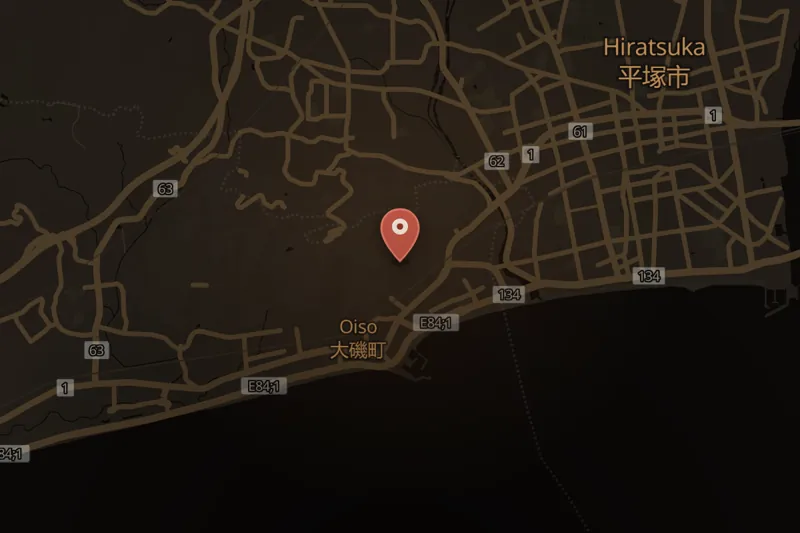
On May 9, 1932, a man and a woman were found dead at the top of Mt. Sakata (a name coined by the reporting journalist) in Ōiso town, in Japan's Shōnan region. According to the Tokyo Nichi Nichi Shimbun's May 10 evening edition, the pair, a man in his mid-twenties wearing a Keio University uniform and a woman in her early twenties, were discovered lying together after apparently drinking sublimated (corrosive) water, with a bowl of flowers placed beside their pillows. Later newspaper coverage identified the two as Zusho Goro and Yuyama Yaeko, both members of the Anglican Church in Japan. Reporting indicated that Goro's father had promised the couple could marry after his graduation, but that Yaeko's parents opposed the match and had arranged a separate marriage for her. A suicide note attributed to Goro, dated May 5, expressed regret and referenced visiting his birth mother's grave.

The day after the initial discovery, evening newspapers reported that Yaeko's corpse had disappeared from the Ōiso cemetery, prompting sensationalized headlines speculating about the culprit's motive. The Ōiso Police Station conducted a large search and recovered the body on the morning of May 11, found unclothed on Ōiso Beach. Newspapers reported that the doctor and police chief who performed the autopsy stated the woman was a virgin, a detail that fueled further sensationalized coverage framing the deaths as pure, tragic love. On May 13, a young man and woman carrying a newspaper photograph of Goro and Yaeko died after jumping in front of a train on the Chūō Main Line near Kofu City. On May 18, police announced that the body had been taken by a 65-year-old crematorium employee, who reportedly confessed to handling the corpse out of curiosity after hearing it was beautiful; the man later stated in subsequent years that this account was not true.

Four days after the initial discovery, Shochiku's film department announced a movie based on the incident, released June 10, 1932, as "Love Tied to Heaven." The film and accompanying media coverage were followed by a wave of copycat suicides: reportedly 20 couples died at Mt. Sakata in 1932 alone, with cumulative suicides and attempts reaching approximately 200 by 1935. Local Ōiso residents sold souvenir items referencing the incident. In the following month, a member of Japanese nobility connected to Tokugawa Yoshinobu died by suicide with a companion. In February 1933, two female students jumped to their deaths at Mount Mihara; while no direct link to the Sakatayama case was stated by those involved, later commentators have suggested the earlier incident's media coverage may have been an influence. Mount Mihara subsequently saw 804 men and 140 women die by jumping in 1933 and became a tourist attraction. In 1950, a newspaper reporter who had accompanied the original autopsy doctor recounted a remark suggesting the woman may not have been a virgin, contradicting the earlier widely publicized finding.

Key facts

Victims
Yuyama Yaeko, Zusho Goro
Date
1932
Location
Mt. Sakata, Ōiso town, Kanagawa Prefecture, Japan
Case status
solved

Case timeline

  1. 1932-05-09

    A man and a woman are found dead atop Mt. Sakata in Ōiso town, apparently after drinking sublimated water; a suicide note dated May 5 is later revealed.

  2. 1932-05-10

    Tokyo Nichi Nichi Shimbun evening edition first reports the discovery of the two bodies.

  3. 1932-05-10

    Evening newspapers report that the woman's corpse has disappeared from the Ōiso cemetery.

  4. 1932-05-11

    Ōiso Police Station recovers the woman's body, found unclothed on Ōiso Beach, following a large-scale search.

  5. 1932-05-13

    A young man and woman die after jumping in front of a Chūō Main Line train near Kofu City, reportedly carrying a newspaper photo of the deceased couple.

  6. 1932-05-14

    Shochiku's film department announces a planned film based on the incident.

  7. 1932-05-18

    Police announce that a 65-year-old crematorium employee is the person who took the woman's body; he later states in subsequent years that his confession account was untrue.

  8. 1932-06-10

    Shochiku releases the film "Love Tied to Heaven," based on the incident.

  9. 1932

    Reportedly 20 couples die by suicide at Mt. Sakata during the year.

  10. 1933-02

    Two female students jump to their deaths at Mount Mihara; later commentary links this to the earlier incident's media coverage.

  11. 1933

    804 men and 140 women reportedly die jumping from Mount Mihara during the year.

  12. 1935

    Cumulative suicides and attempts linked to the wave, including at Mt. Sakata, reach approximately 200 since 1932.

  13. 1950

    A newspaper reporter recounts a remark by the original autopsy doctor suggesting the woman may not have been a virgin, contradicting 1932 reports.

Best coverage

No approved coverage links are attached yet.

People

  • Yuyama Yaeko

    VICTIM

    Woman found dead alongside Zusho Goro atop Mt. Sakata on May 9, 1932; her corpse was subsequently stolen from the Ōiso cemetery and later recovered on Ōiso Beach.

    citation on file

  • Zusho Goro

    VICTIM

    Man found dead alongside Yuyama Yaeko atop Mt. Sakata on May 9, 1932, in an apparent double suicide; identified in later press coverage as a Keio University student and member of the Anglican Church in Japan.

    citation on file

Places

Common questions

What happened to the victim?
In May 1932, a man and woman were found dead atop Mt. Sakata in Ōiso, Japan, in an apparent double suicide by poison; the ensuing media frenzy, a body-snatching incident, and a hit film adaptation were linked by contemporaries and later commentators to a wave of copycat suicides.
Where did the crime happen?
Mt. Sakata, Ōiso town, Kanagawa Prefecture, Japan.
What is the current status of the case?
Status: solved. Last verified July 2026.

Sources

  1. Sakatayama double suicidewikipedia · Wikipedia · 2026-07-07
  2. Contemporaneous coverage — bunshun.jpnews · bunshun.jp · 2026-07-07
  3. Contemporaneous coverage — cir.nii.ac.jpnews · cir.nii.ac.jp · 2026-07-07

Last verified JUL 2026