Casepin
Back to cases

Case file

Sand Creek Massacre

SOLVED1864Sand Creek Massacre site, Kiowa County, Colorado4 SOURCESUPDATED JUL 2026
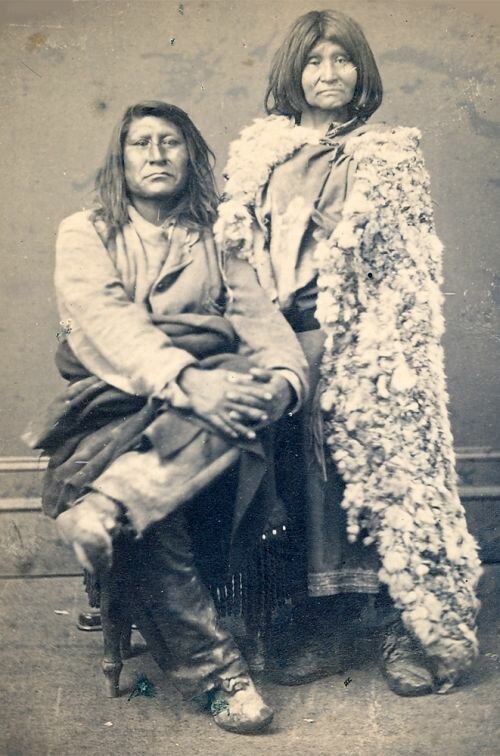
Illustrative

Background

Under the 1851 Treaty of Fort Laramie, the United States recognized a large territory belonging to the Cheyenne and Arapaho. After gold was discovered in Colorado in 1858, settlers flooded into the region, and in 1861 several Cheyenne and Arapaho chiefs signed the Treaty of Fort Wise, ceding most of that territory. Many Cheyenne, including the militaristic Dog Soldiers band, rejected the treaty and continued to live on their traditional lands, and tensions with settlers escalated through 1863 and 1864. Incidents in the spring and summer of 1864—including attacks on Cheyenne camps by Colorado troops under Lieutenant George Eayre and the killing of chief Lean Bear—coincided with raids on settlers, stage lines, and livestock by Plains tribes. In July 1864, Colorado Governor John Evans issued a circular inviting friendly Native people to gather at Fort Lyon for safety, but at a September 28, 1864 council he told chiefs, including Black Kettle, that peace terms would have to come from the military rather than from him.

The attack

Black Kettle's band, along with Arapaho under Chief Niwot, had moved to a camp on Sand Creek under military guidance and were considered under the protection of Fort Lyon; most warriors were absent hunting, leaving mainly the old, young, women, and children. On the morning of November 29, 1864, Colonel John Chivington led roughly 675 men of the Third and First Colorado Cavalry, guided by frontiersman James Beckwourth, in an attack on the camp despite Black Kettle flying a U.S. flag and a white flag. Captain Silas Soule and Lieutenant Joseph Cramer refused orders to fire and held their men back, but most soldiers attacked, killing and mutilating villagers regardless of the flags. Estimates of the dead range from 70 to over 600; most historians place the toll around 150, with about two-thirds women and children. Survivors, including George Bent, fled up the creek and hid in the riverbank before regrouping at other Cheyenne camps.

Investigations and aftermath

Congressional and military investigations followed. The Joint Committee on the Conduct of the War condemned Chivington's actions as a "foul and dastardly massacre," but because Chivington had already resigned his commission, no criminal charges were brought against him or his men. Captain Silas Soule, who had testified about the massacre, was killed in Denver weeks afterward by a man reported to be under Chivington's command. The massacre disrupted traditional Cheyenne leadership, contributed to further conflict including 1865 raids at Julesburg, and led to the 1865 Treaty of the Little Arkansas, which promised reparations later abrogated by subsequent treaties.

Remembrance

The site is preserved as the Sand Creek Massacre National Historic Site, dedicated in 2007 and expanded in 2022. In 2014, Colorado Governor John Hickenlooper formally apologized to descendants at the 150th anniversary commemoration.

Key facts

Victims
Lean Bear, White Antelope, Ochinee (One-Eye), Black Kettle
Date
1864
Location
Sand Creek Massacre site, Kiowa County, Colorado
Case status
solved

Case timeline

  1. 1851

    Treaty of Fort Laramie recognizes Cheyenne and Arapaho territory spanning parts of present-day Wyoming, Nebraska, Colorado, and Kansas.

  2. 1858

    Discovery of gold triggers the Pikes Peak Gold Rush, bringing settlers into Cheyenne and Arapaho lands.

  3. 1861-02-18

    Six Cheyenne and four Arapaho chiefs sign the Treaty of Fort Wise, ceding most of their recognized territory; many Cheyenne, including the Dog Soldiers, reject it.

  4. 1864-04-12

    Colorado troops attack Cheyenne men near Fremont's Orchard without attempting parley.

  5. 1864-05-16

    Cheyenne chief Lean Bear is shot and killed by troops under Lieutenant George Eayre while approaching to show peaceful intent.

  6. 1864-06

    Hungate massacre of settlers occurs, cited as an atrocity attributed to Cheyenne warriors during escalating hostilities.

  7. 1864-06-27

    Governor John Evans issues a circular inviting friendly Native people to gather at Fort Lyon for safety and provisions.

  8. 1864-09-28

    Cheyenne chiefs meet Governor Evans in Denver; Evans tells them peace must be negotiated with the military, not with him.

  9. 1864-11-06

    Arapaho led by Chief Little Raven arrive at Fort Lyon and are provisioned; Cheyenne who later arrive are turned away.

  10. 1864-11-28

    Colonel John Chivington and his force arrive at Fort Lyon before proceeding to Black Kettle's camp.

  11. 1864-11-29

    Chivington's force attacks the Cheyenne and Arapaho camp at Sand Creek, killing an estimated 70 to over 600 people, mostly women and children.

  12. 1865

    Treaty of the Little Arkansas is signed, promising land and reparations to Sand Creek survivors and descendants.

  13. 1865-01

    Cheyenne, Arapaho, and Sioux warriors carry out a retaliatory attack with about 1,000 warriors on Camp Rankin at Julesburg, Colorado.

  14. 1909

    A monument on the Colorado State Capitol grounds lists Sand Creek among Colorado's Civil War 'battles and engagements.'

  15. 2002

    Colorado Historical Society adds a plaque stating the 1909 monument mischaracterized Sand Creek as a battle.

  16. 2007-04-28

    Sand Creek Massacre National Historic Site is dedicated.

  17. 2014-12-03

    Colorado Governor John Hickenlooper formally apologizes to descendants of Sand Creek massacre victims at a 150th anniversary commemoration.

  18. 2022-10

    Approximately 3,478 acres are announced to be added to the Sand Creek Massacre National Historic Site.

Best coverage

No approved coverage links are attached yet.

People

  • Lean Bear

    VICTIM

    Cheyenne chief shot and killed by troops under Lieutenant George Eayre on May 16, 1864, while displaying a peace medal and a document from President Lincoln.

  • White Antelope

    VICTIM

    Cheyenne chief killed and mutilated during the massacre.

  • Silas Soule

    LAW ENFORCEMENT

    Captain who refused to order his men to fire on the camp and later testified about the massacre; was killed in Denver weeks after testifying by a man reported to be under Chivington's command.

  • Ochinee (One-Eye)

    VICTIM

    Cheyenne peace chief killed at Sand Creek after returning to the camp despite having escaped.

  • John Chivington

    CHARGED

    U.S. Volunteers Colonel who commanded the attacking force; a Joint Committee on the Conduct of the War condemned his conduct, but no criminal charges were brought because he had already resigned his military commission.

  • Black Kettle

    VICTIM

    Leading Cheyenne peace chief whose camp was attacked; survived the massacre but lost members of his band.

Roles reflect public records and court outcomes at the time of writing — supporting citations are on file under Sources.

Places

Common questions

What happened to the victim?
On November 29, 1864, a 675-man force of the Third Colorado Cavalry under Colonel John Chivington attacked a village of peaceful Cheyenne and Arapaho people camped on Sand Creek in Colorado Territory, killing an estimated 70 to over 600 people, most of them women, children, and the elderly.
Where did the massacre happen?
Sand Creek Massacre site, Kiowa County, Colorado.
What is the current status of the case?
Status: solved.

Sources

  1. OFFICIAL / AGENCYSand Creek MassacreU.S. National Park Service · 2026-07-11
  2. ENCYCLOPEDICSand Creek massacreWikipedia · 2026-07-10
  3. OFFICIAL / AGENCYContemporaneous coverage — nps.govnps.gov · 2026-07-10
  4. OFFICIAL / AGENCYContemporaneous coverage — home.nps.govhome.nps.gov · 2026-07-10