Background
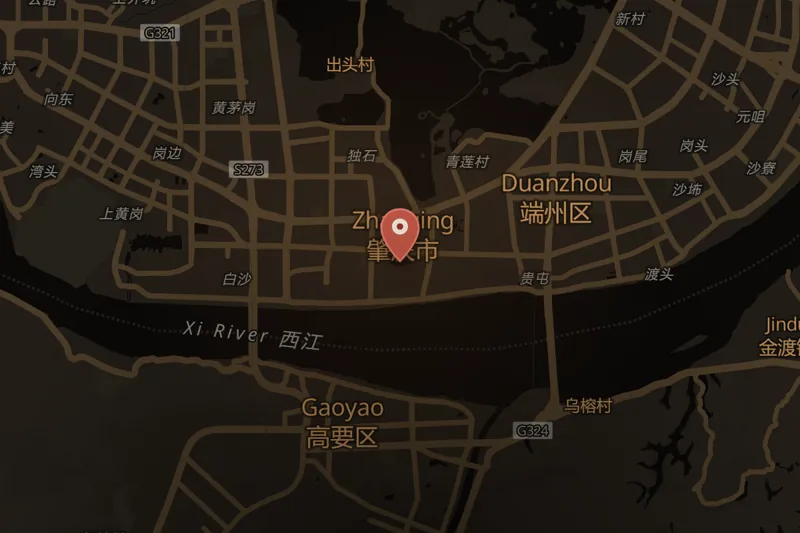
Beginning in June 1995, unexplained deaths of animals and fish were reported in the Sanyao Management District (三姚管理区). At first these deaths received little attention. From August 1995, in addition to further animal deaths, people in the area began to experience strange illnesses, fainting, and deaths on the street. Local residents initially suspected a gold mining company, Lixing Co., Ltd., which had begun trial gold-smelting production in May 1995. Residents blamed the company for crop deaths, dead fish, and dead livestock, and at one point a group of people stormed the company's building. Production was ordered halted after complaints, though the company reportedly continued covert operations. Fearing a plague, some residents fled the area, and schools, factories, and exits were closed amid growing disorder.
Investigation
On August 27, 1995, a pond containing large numbers of dead fish fry was found, along with more than ten empty bottles of tetramine near a reservoir. This discovery led police to suspect intentional mass poisoning rather than industrial contamination or disease. Because relatives of the deceased initially refused autopsies due to local customs and prejudice, the exact cause of death could not immediately be confirmed. Eventually, with support from local authorities, relatives of six of the dead agreed to autopsies. Sample testing began on October 17, 1995, and on November 21, 1995, investigators determined that the victims and animals had been poisoned with fluoroacetamide and sodium fluoroacetate, confirming deliberate mass poisoning.
In mid-November 1995, a waiter at a diner in Jinli observed a woman putting something into a kettle during breakfast service and alerted police. Analysis of the water found large amounts of fluoroacetamide and zinc phosphide.
Arrests and confession
On December 7, 1995, police detained a 42-year-old woman, Du Runqiong, and her 19-year-old son, Tang Youhua. A search of their home on December 11 uncovered poisoned aluminum pots, a backpack used to carry poison, and a kilogram of poisoned rice, along with about 2,300 empty tetramine bottles. During interrogation, Du Runqiong admitted mixing poison into rice and distributing it, describing a superstitious belief — following visits to a local temple and divination practices — that she had received a message compelling her to kill people she considered "bad." She and her son used metamidophos pesticide and a rat poison branded "Living Angel," which contained fluoroacetamide and sodium fluoroacetate, targeting crops, animals, and later food prepared in a diner, markets, and kitchens.
Outcome
The poisonings caused 18 deaths and 163 hospitalizations, along with the deaths of ten large cattle, 243 pigs, more than 3,100 chickens, and more than 300 fish, resulting in an estimated 2.8 million yuan in direct economic losses. On December 26, 1995, the Zhaoqing Interim People's Court sentenced Du Runqiong and Tang Youhua to death. Their appeal to the Guangdong High People's Court was rejected, and both were executed on January 8, 1996.

 Credit: 钟启明CC BY-SA 3.0SourceSOLVEDListen


