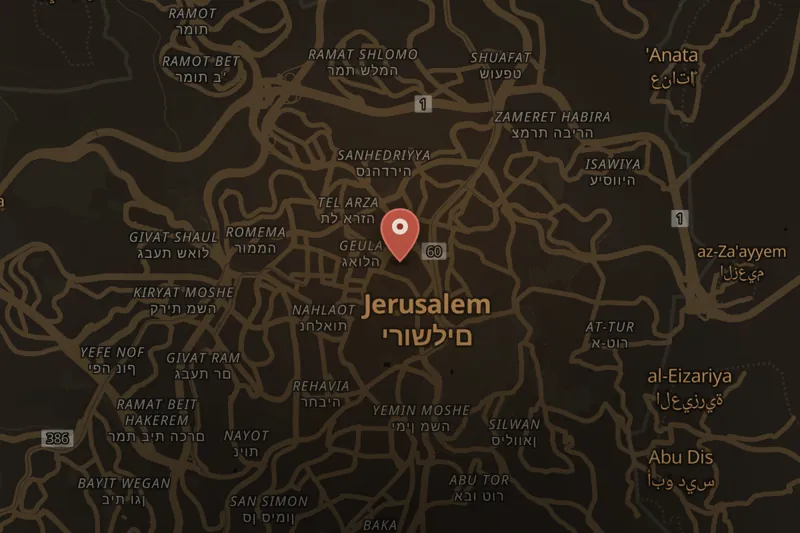
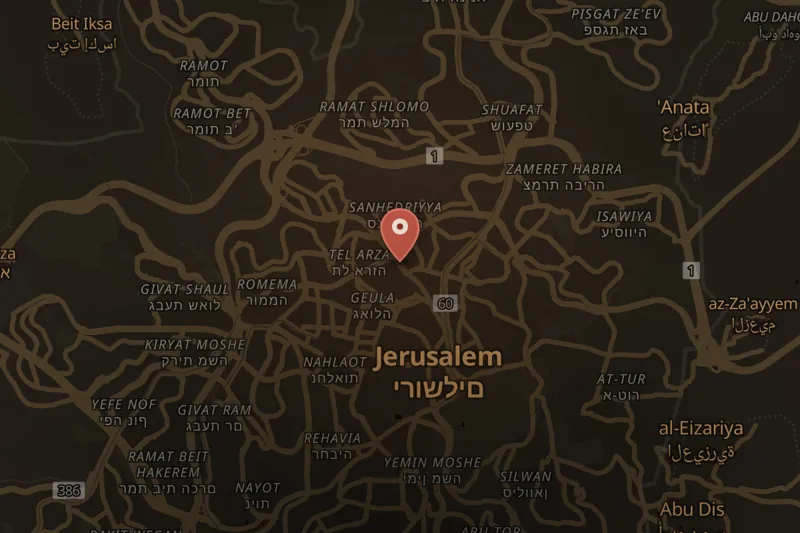
On the evening of Saturday, 2 March 2002, a suicide bombing occurred in the Beit Yisrael neighborhood of downtown Jerusalem, near the entrance of the Haredi yeshiva "Beit Yisrael" (Mahane Yisrael). The attack took place shortly after 7 p.m., as streets filled with worshippers who had just finished Shabbat prayers. Families had gathered near the yeshiva for the bar mitzvah of Naveh Hazan, while another family, the Hajabis, were celebrating a separate bar mitzvah; members of the related Nehmad and Ilan families had also traveled to Jerusalem for the occasion.
The bomber stood among a group of women with baby strollers who were waiting outside a nearby synagogue for their husbands to finish services. He detonated a device packed with shrapnel as the celebration was ending, causing an explosion that shook the downtown area and ignited a nearby car. Eleven Israeli civilians were killed — ten instantly and one who later died of injuries — including two infants, three children, and two teenagers. Eight of the fatalities came from the Nehmad family. More than 50 people were injured, four critically. Among those killed were a mother and her three-year-old son, an infant and her six-year-old brother, and a 12-year-old boy. A pregnant woman survived the blast but lost both of the twins she was carrying.
Eyewitnesses described scenes of severe carnage, including a baby carriage beside a deceased infant, and rescue workers from Magen David Adom recalled arriving to find people with severe injuries amid widespread destruction. The Beit Yisrael neighborhood had previously been targeted in three earlier attacks, and the bombing site was only meters from a car bombing that had occurred the previous year.
The al-Aqsa Martyrs' Brigades, the armed wing of Fatah, claimed responsibility, stating the attack avenged the deaths of 19 Palestinians killed during Israeli military incursions into the Balata and Jenin refugee camps earlier that week. The bomber was identified as 19-year-old Mohammed al-Chouhani from the Dheisheh refugee camp near Bethlehem. Following the attack, approximately 1,500 Palestinians in the camp celebrated by handing out sweets and firing weapons into the air; hundreds more took to the streets elsewhere in celebration.
Two men identified as the bomber's assistants, Ashraf Hajajre and Muhammad Sarahne, were later captured and sentenced to life imprisonment — in March 2004 and November 2003, respectively — but were released as part of the October 2025 Gaza ceasefire agreement.
The bombing drew international condemnation. The US State Department called it a "terrorist outrage," and United Nations High Commissioner for Human Rights Mary Robinson expressed shock and horror, stating that suicide bombings undermine the Palestinian cause. The Nehmad family were buried in Rishon Letzion, and Israel's Health Minister at the time offered public condolences. Separately, Israeli broadcaster Channel 2 drew public and journalistic criticism for continuing to air a soccer match alongside breaking coverage of the attack.
 SOLVEDListen


