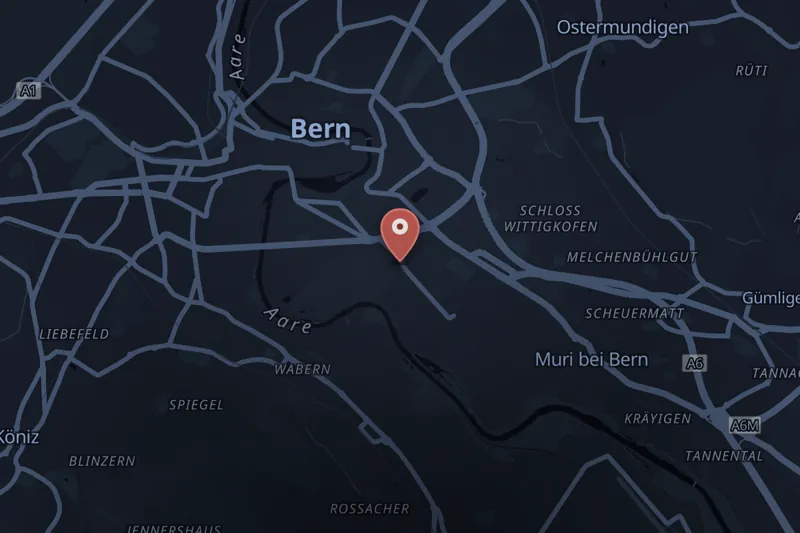
On September 6, 1982, four Polish exiles armed with shotguns, knives, and gas masks seized the Polish embassy in Bern, Switzerland, taking 14 embassy workers hostage. The group was led by Florian Kruszyk, a former officer of the Polish security service (Służba Bezpieczeństwa, SB). The gunmen identified themselves as members of an organization called the "Insurgent Home Army" (Powstańcza Armia Krajowa), a group later designated as a terrorist organization by Poland and believed to have been linked to a prior deadly attack in Poland earlier that year.
The hostage-takers threw a written message from the embassy window demanding the abolition of martial law in Poland, the release of political prisoners, the dismantling of what they described as prison camps, and an end to repression of the Polish people. They also threatened to release confidential documents allegedly held in the embassy and demanded several million Swiss francs, threatening to destroy the building with explosives — later revealed to be a bluff, as the group did not possess the dynamite they claimed to have, and a submachine gun they carried was a mockup.
Negotiations were led by Swiss Federal Councillor Kurt Furgler, assisted by Dominican priest Józef Maria Bocheński, over 35 recorded phone calls. As the situation continued, the hostage-takers reduced their demands to three million Swiss francs and safe passage to a foreign country. Polish authorities' offer to send their own special forces to storm the embassy was rejected by Swiss authorities. On September 8, the Swiss Federal Council authorized Furgler to order a raid, and in the early hours of September 9, the operation, codenamed "Operation Essen," began. Later that morning, a disguised petard containing tear gas was used to enable Switzerland's Stern anti-terror squad to storm the embassy; the raid concluded within roughly 12 minutes without shots fired or resistance, freeing the five hostages still held.
The four perpetrators — Florian Kruszyk (42), Marek Michalski (20), Miroslaw Plewinski (23), and Krysztof Wasilewski (33) — were convicted and sentenced on October 10, 1983. Kruszyk received six years' imprisonment and 15 years' banishment from Switzerland; the other three received sentences of 2.5 to three years' imprisonment and five years' banishment. Swiss authorities rejected extradition requests to Poland, citing that Poland was not party to a relevant Western European agreement on prosecuting terrorism.
A separate matter came to light in 2013: members of the Swiss Federal Intelligence Service reportedly entered the embassy during the crisis, seized diplomatic documents in violation of the Vienna Convention on Diplomatic Relations, photocopied them at the federal prosecutor's office, and returned them. The head of the hostage task force, Benno Schneider, acknowledged ordering the documents copied, and Furgler had approved the copying despite public denials at the time.

 Credit: EinDaoCC BY-SA 4.0SourceCOLDListen