Background
By the late 1990s, Sri Lanka was in the midst of a civil war between government forces and the Liberation Tigers of Tamil Eelam (LTTE), a separatist militant group seeking an independent Tamil state in the north and east. Following military operations that shifted control of various areas between 1995 and 1997, the LTTE carried out a series of suicide attacks on military, economic, and civilian targets in government-held areas. In early 1998, Sri Lanka prepared to mark the 50th anniversary of independence from Great Britain, with Kandy selected to host the main independence day event on 4 February and the Prince of Wales scheduled to attend.
The Attack
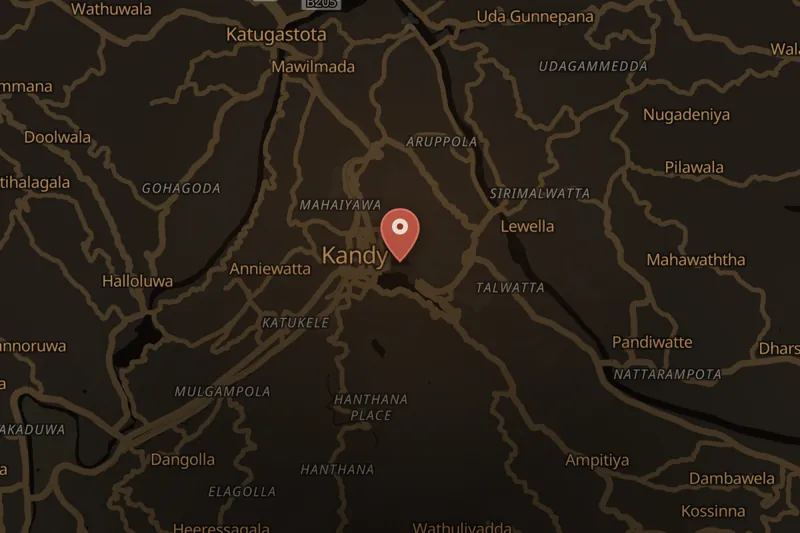
On 25 January 1998, three LTTE Black Tigers drove a truck loaded with 300–400 kilograms of high explosives along King's Street in Kandy, firing on soldiers at roadblocks before crashing through the entrance of the Temple of the Tooth complex. The truck detonated around 6:10 am local time. The blast killed 17 people, including the three attackers and a two-year-old infant, and injured more than 25 others, including four women, a monk, and a police officer. A geology professor, P. W. Withanage, also died after suffering shock upon hearing of the incident. The explosion damaged buildings within a 5-kilometre radius.
Aftermath
The bombing triggered public unrest in Kandy, where crowds burned vehicles and a Hindu cultural center, and a mob later attacked and looted the Sri Selva Vinayagar Hindu temple, damaging statues of 22 deities; police used tear gas to disperse crowds, and no one was physically harmed in these secondary incidents. President Chandrika Kumaratunga and other community leaders urged against retaliation targeting the Tamil community. The following day, the Sri Lankan government formally banned the LTTE for the first time. Defence Minister Anuruddha Ratwatte resigned, citing responsibility for the security lapse. Independence day celebrations were relocated to Colombo, and local elections proceeded in Jaffna despite the violence.
In October 2003, the Kandy high court convicted three LTTE cadres in connection with the attack, sentencing them to death; two others received prison terms of 680 years and one received 490 years.
Damage and Restoration
The temple's roof, facade, the Paththirippuwa, the grand entrance, the royal palace, the moonstone, the queen's bath, the library, and several sculptures were damaged, though the inner chambers and the tooth relic itself were not harmed. The site reopened to the public on 10 February 1998, but full restoration took over a year and a half, overseen by a presidential task force and a restoration committee, and was completed by August 1999. Public donations for restoration exceeded 100 million rupees.
Reaction
The attack drew condemnation from Buddhist, Hindu, Christian, and Islamic religious leaders in Sri Lanka, as well as from UNESCO, the United Nations Secretary-General's office, Amnesty International, Prince Charles, and the then–United States ambassador to Sri Lanka.


 Credit: CIAPublic domainSourceUNSOLVEDListen