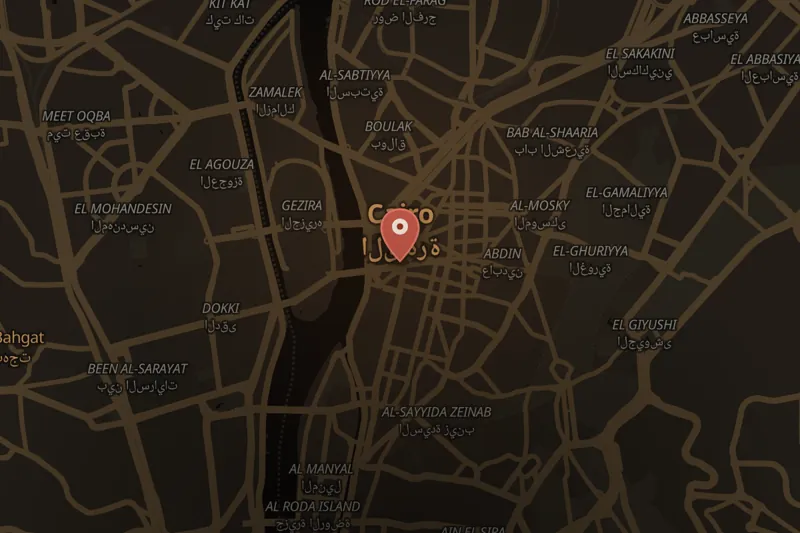
On the evening of 22 February 2009, at approximately 6:30 p.m. local time, an explosive device detonated in Khan el-Khalili, a historic souq (market) in eastern Cairo, Egypt. The attack occurred in front of a cafe that was crowded with people who had gathered to watch a televised football match. Security officials reported that the bomb had exploded under a bench in a garden in the square, although there were conflicting early reports suggesting it may have been thrown from a balcony or a motorcycle. A second explosive device at the scene failed to detonate and was subsequently defused by authorities.
The devices reportedly weighed 1.5 kilograms (3.3 lb) each and contained nails and metal fragments, consistent with an intent to maximize casualties among bystanders. Early reports characterized the explosive devices as "primitive" in construction.
A 17-year-old French girl was killed in the blast. She had been part of a group of 54 teenagers from Levallois-Perret, a town near Paris, who were visiting Cairo. In addition to the fatality, seventeen French nationals, one German national, and three Saudi tourists were wounded, along with three Egyptians. In total, 24 people other than the victim who died were reported injured.
According to security sources at the time, no militant group immediately claimed responsibility for the attack. However, three suspects were taken into custody by Egyptian authorities in connection with the bombing.
The attack drew international reaction, including condemnation from then French President Nicolas Sarkozy and then French Prime Minister François Fillon. The bombing raised concerns about a potential return of Islamic militant activity targeting Egypt's tourism sector, a sector that had previously been severely affected by bombings and shootings attributed to Islamic militants during the 1990s. Some speculation at the time linked the attack to anger over Egypt's role in the Gaza conflict, though this connection was not confirmed.
The economic impact on Cairo's tourism industry was notable in the aftermath: hotel revenues and occupancy rates fell, which in turn resulted in the dismissal of hospitality workers. This bombing was identified as the first in a series referred to collectively as the February 2009 Cairo terrorist attacks.

 Credit: Carlos LatuffPublic domainSourceUNSOLVEDListen