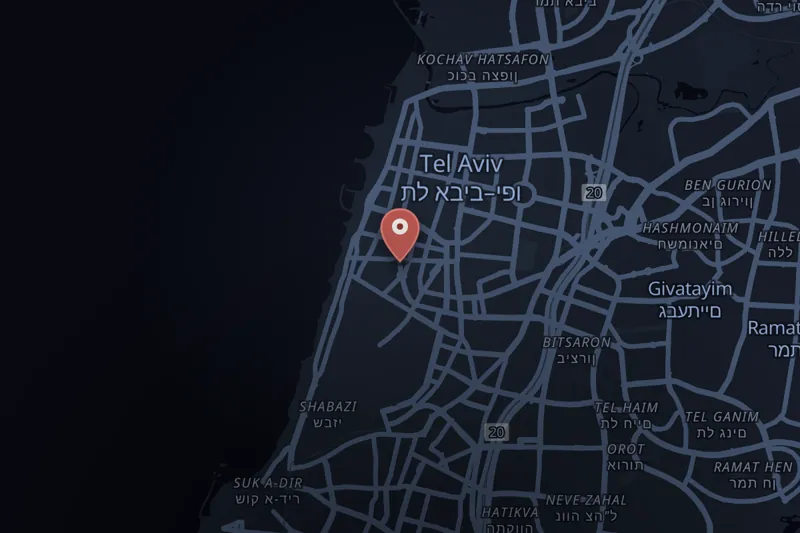
On the morning of the attack, a bus traveling down Dizengoff Street in Tel Aviv was targeted in a suicide bombing that killed 22 civilians — 21 Israelis and one Dutch national — and injured 50 others. At the time, it was the deadliest suicide bombing in Israeli history and the first successful suicide attack carried out in Tel Aviv. The attack was planned by Hamas figure Yahya Ayyash, reportedly a week before the signing of the Israel-Jordan Treaty of Peace.
Ayyash had been dissatisfied with the outcome of a prior attack he orchestrated, the Hadera central station suicide bombing, which killed six Israelis using a relatively weak acetone peroxide device. For the Dizengoff Street attack, Ayyash built a bomb using an Egyptian land mine packed with twenty kilograms of military-strength TNT, surrounded by nails and screws. TNT was not readily available in the Palestinian territories at the time, and Hamas reportedly acquired it either through smuggling or purchase from Israeli organized crime networks.
Qalqilya resident Saleh Abdel Rahim al-Souwi was selected to carry out the attack. Al-Souwi had joined Hamas after his older brother was killed in a 1989 shootout with Israeli forces. He was wanted by the Israeli Shabak (Israel Security Agency) but was not considered a high priority target at the time. The day before the bombing, al-Souwi recorded a statement expressing willingness to die as a martyr.
On the day of the attack, a member of Ayyash's Samaria battalion of the Izz ad-Din al-Qassam Brigades drove al-Souwi to one of the bus's early stops. Al-Souwi boarded, took an aisle seat, and placed the bomb — concealed in a brown bag — at his feet. At approximately 9:00 AM, as the bus slowed for a stop about 100 metres north of Dizengoff Square, al-Souwi detonated the device, destroying the bus.
In the aftermath, a crowd of demonstrators gathered at the bomb site chanting anti-Arab slogans, and police arrested a number of Arab suspects in the area, most reportedly detained for their own protection from the crowd. Israeli police identified al-Souwi as the perpetrator, and his identity was confirmed the following day using DNA evidence. Al-Souwi's family held a neighborhood gathering described as celebrating his death, after which Israeli security forces demolished the family home, giving the family one hour to remove their belongings.

 SOLVEDListen


