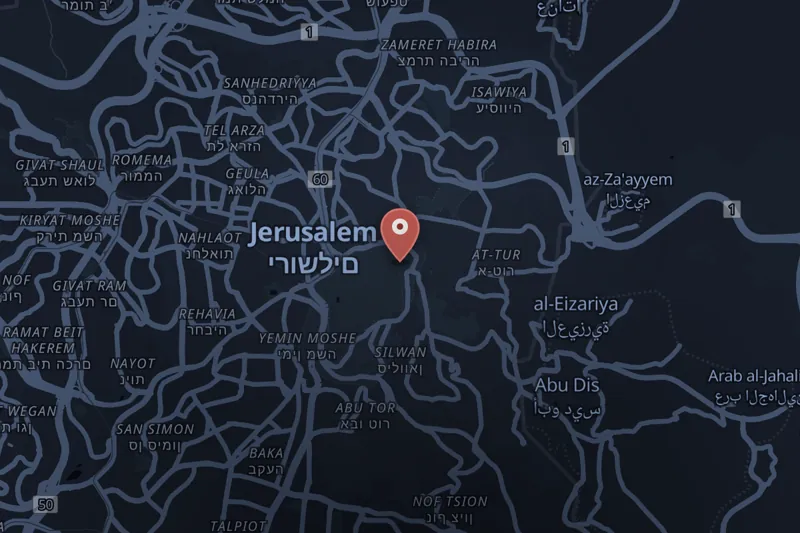
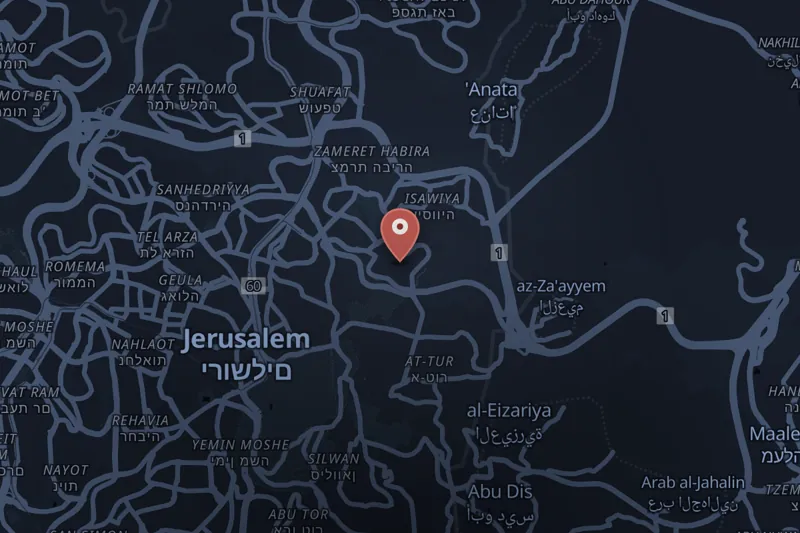
On 31 July 2002, during the summer examination period at the Hebrew University of Jerusalem's Mount Scopus campus, a bomb was detonated inside a crowded cafeteria in the Frank Sinatra International Student Center. The device had been placed on a table in the middle of the cafeteria, covered with a newspaper, and doused with perfume to mask the smell of explosives, before being detonated remotely by cell phone. The explosion killed nine people — six women and three men — seven of whom died immediately and two of whom died of their wounds in the following weeks. About 100 people were injured, including Israelis, Arabs, four Americans, and three South Koreans; five of those killed were U.S. students.
Israel's Shin Bet security service arrested five people in connection with the attack. During interrogation, those arrested revealed the existence of a second, undetonated bomb, which was subsequently located and disarmed. Israeli authorities concluded that Muhammad Odeh, who worked as a painter at the university, had carried out the bombing, reportedly using access afforded by his university ID card. He was released in January 2025 as part of a hostage exchange tied to a ceasefire in the 2025 Israel–Hamas war. Members of the East Jerusalem-based Hamas cell responsible for the bombing are serving multiple life sentences in Israeli prisons for that attack and others.
Hamas claimed responsibility for the bombing at a rally in Gaza City attended by an estimated 10,000 supporters, with a masked speaker describing it as part of a continuing series of operations. Hamas stated the attack was carried out in revenge for the Israeli targeted killing of the group's military chief, Salah Shehadeh. Hundreds of Hamas supporters later gathered in Gaza City to celebrate the bombing. The attack was condemned by United Nations Secretary-General Kofi Annan, the government of Israel, the Palestinian Authority (which also blamed Israeli policy for the violence), the United States, China, and South Africa.
In the aftermath, Israel intensified security at the university, becoming the first Israeli university to employ bomb-sniffing dogs (in 2005) and to ban legally carried guns from its campuses; entrances were fitted with metal detectors and staffed by security guards. Separately, Israel adopted and later shelved (in February 2005) a policy of demolishing the houses of suicide bombers as a deterrence measure. In February 2015, a jury in the U.S. Federal District Court for the Southern District of New York found the Palestinian Authority and the Palestine Liberation Organization liable for supporting and helping to fund a series of attacks, including this one, and ordered them to pay $218.5 million in damages to victims. In 2022, Palestinian Media Watch reported that the Palestinian Authority's Martyrs Fund program had raised the monthly stipends paid to those responsible for the bombing.

 Credit: BekmawCC BY-SA 4.0SourceSOLVEDListen