
Start here
Catrine da Costa: Sweden's Body In The Bags Mystery

Stephanie Harlowe's 85-minute breakdown, the fullest single telling on file.
Watch on YouTubeBefore you continue
This case involves sexual violence and crimes against children. Casepin presents the record in neutral, non-graphic language. Choose whether to continue.
Unsolved case · 1984
Also known as Murder of Catrine da Costa · da Costa-fallet
 Catrine da CostaImage record·Editorial use·Source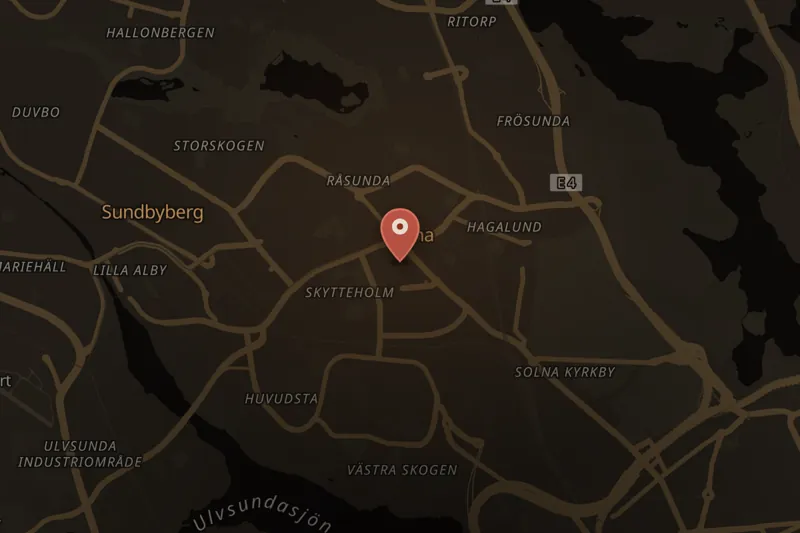
The short answer
The 1984 killing and dismemberment of Catrine da Costa near Stockholm remains unsolved; two physicians were tried and acquitted, and no cause of death was ever established.
Start hereCatrine da Costa: Sweden's Body In The Bags MysteryStephanie Harlowe · 1 hr 25 minThe coverage index
1 piece from 1 creator: ranked, with duplicates removed and short clips set aside.
Start here
Video · YouTube · 1 hr 25 min · 2024
Stephanie Harlowe's 85-minute breakdown, the fullest single telling on file.
Watch on YouTubeTitles and descriptions are the creators’ own and may not reflect current legal status. The sourced facts are in the file below. Players load only when you press play. Suggest coverage we’re missing.
The case file
Catrine da Costa, born on 19 June 1956, was a Swedish woman whose dismembered remains were found near Stockholm in the summer of 1984. According to Swedish reporting summarised in the case's Wikipedia article, she was a divorced mother of two who was homeless, living with heroin addiction, and working as a prostitute in Stockholm in early 1984. She disappeared around the Pentecost weekend of 10 June 1984, and the last reported sighting placed her on Gamla Brogatan in central Stockholm on 15 June. On 18 July 1984, parts of her body were discovered under a highway overpass in Solna, north of Stockholm, and further remains were recovered on 7 August. Her body was identified through fingerprints.
Because her head, internal organs, one breast and genitalia were never recovered, no cause of death could be determined, and how da Costa died has never been formally established. The case became widely known in Sweden as styckmordsrättegången, the 'dismemberment murder trial.' Investigators gave it limited attention at first, amid a high volume of violent crime in Stockholm at the time.
Two physicians eventually became the focus of the investigation. A forensic pathologist who worked at the Karolinska Institutet was reported to police by his late wife's father and was arrested and released; his mentor supported the theory that he had carried out the dismemberment, a view later criticised by other forensic pathologists. Separately, allegations arose that a general practitioner's young daughter might have been abused and, later, that she spoke of witnessing a dismemberment, though pediatric examinations found no evidence of abuse. Because the two doctors were acquainted, police linked the cases, and child-testimony evidence featured in the later trials. In 2024, the child psychiatrist involved said he had never discussed a dismemberment murder with the child.
The two doctors were arrested in late 1987 and tried from January 1988. The first trial ended in a mistrial after lay judges were interviewed by the newspaper Aftonbladet on 9 March 1988. In a second trial, the court acquitted both men, finding it could not be established that da Costa had died under suspicious circumstances; the verdict stated that the defendants had dismembered the body, but that the statute of limitations for that offence had expired.
On 23 May 1989, a Swedish medical-negligence authority revoked the doctors' right to practise, a decision upheld on appeal in 1991 and not overturned by higher courts. The case inspired books, articles and documentaries and is cited as an influence on Swedish crime fiction. The statute of limitations for the killing expired in 2009, and prosecutors suspended their investigation on 1 July 2009; no one has been convicted of the killing. A February 2010 ruling denied the doctors damages, and on 16 June 2026 the Swedish Justice Minister announced an ex gratia payment of 2 million SEK to each man together with a public apology.
13 dated entries · 1956–2026
Catrine da Costa is born.
Da Costa disappears in Stockholm around the Pentecost weekend.
Last reported sighting of da Costa, on Gamla Brogatan in central Stockholm.
Parts of da Costa's dismembered body are found under a highway overpass in Solna.
Further remains are recovered elsewhere; the body is identified by fingerprints.
Two physicians are arrested in connection with the case.
The two physicians are brought to trial.
The first trial ends in a mistrial after lay judges are interviewed by the newspaper Aftonbladet.
A Swedish medical-negligence authority revokes the two doctors' right to practise.
The revocation of the doctors' medical licences is upheld on appeal.
With the statute of limitations expired, prosecutors suspend the investigation.
A court rules the two doctors are not entitled to damages from the state.
Sweden's Justice Minister announces an ex gratia payment of 2 million SEK to each man and a public apology.
3 named in this file
Victims first. Every legal label is set from public records and court outcomes, not from the prose.
Swedish woman, a divorced mother of two, whose dismembered remains were found near Stockholm in 1984 and identified by fingerprints; her cause of death was never determined.[3]
Forensic pathologist at the Karolinska Institutet who was charged in the dismemberment case, tried from 1988 and acquitted; received a Swedish government public apology and ex gratia payment in 2026.[3]
General practitioner who was charged in the dismemberment case, tried from 1988 and acquitted; received a Swedish government public apology and ex gratia payment in 2026.[3]
3 cited
Coverage is not a source: every fact in this file rests on the records below.
PressThe GuardianAccessed Jul 5, 2026
PressThe TelegraphAccessed Jul 5, 2026
EncyclopedicWikipediaAccessed Jul 5, 2026
Trust
Are you family of someone named in this file? Corrections and removal requests from victims’ families are prioritized.
Near this case
 SOLVEDListen
Karolinska Institutet, Stockholm, Sweden · 2000s
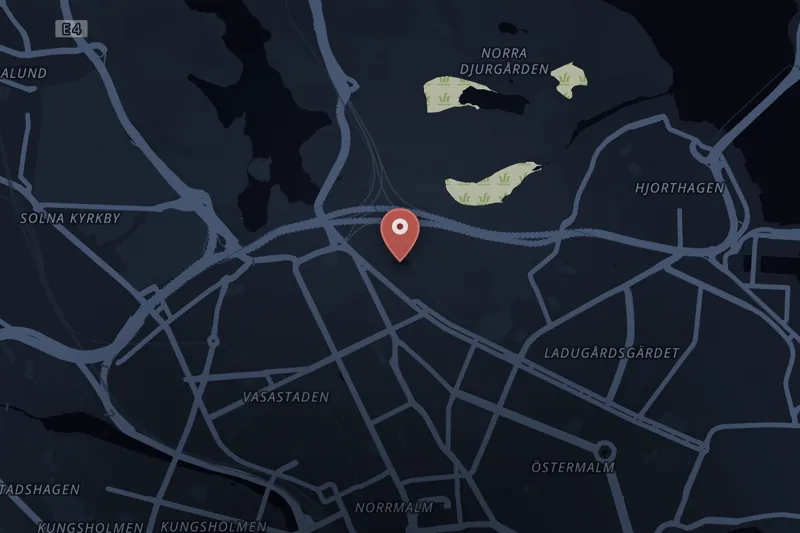
Thoracic surgeon Paolo Macchiarini, once celebrated as a pioneer of stem-cell-seeded trachea transplants, was convicted in Sweden of causing bodily harm to patients after most of those given his synthetic trachea implants died; he is now serving a prison sentence in Spain.
Sveavägen, Stockholm, Sweden · 1980s
Swedish Prime Minister Olof Palme was shot dead on a Stockholm street on 28 February 1986 while walking home with his wife; despite one conviction later overturned on appeal and a 2020 prosecutorial conclusion naming a deceased suspect, the case remains legally unsolved and was closed in 2020, with the main suspect's designation later withdrawn in 2025.
 SOLVEDListen
Stockholm and Uppsala, Sweden · 1990s
Between August 1991 and January 1992, a gunman Swedish media called 'Lasermannen' (the Laser Man) shot eleven people, most of them immigrants, in the Stockholm and Uppsala area, killing one and seriously wounding several others; he was identified as John Ausonius, arrested in June 1992, and sentenced to life imprisonment in January 1994.
 Credit: Jgb23·CC BY-SA 4.0·SourceSOLVEDListen
Blacktown / Prospect, New South Wales, Australia · 1986
Anita Cobby, a 26-year-old nurse, was abducted while walking home from Blacktown railway station in Sydney on 2 February 1986, then raped, tortured and murdered by five men. Her body was found two days later; all five perpetrators were convicted in 1987 and sentenced to life imprisonment without parole.
 Credit: D4444n at en.wikipedia·CC BY-SA 3.0·SourceSOLVEDListen
Grand Hotel, Brighton, England · 1984
On 12 October 1984 the IRA detonated a long-delay bomb at the Grand Hotel in Brighton in an attempt to assassinate Prime Minister Margaret Thatcher and her cabinet during the Conservative Party Conference. Five people were killed and more than thirty injured; Thatcher was uninjured. IRA member Patrick Magee was convicted in 1986 and sentenced to eight concurrent life terms.
 Credit: English Wikipedia·Editorial use·SourceSOLVEDListen
Mercy Road offramp, Interstate 15, San Diego County, California · 1986
Cara Knott, a 20-year-old San Diego State University student, disappeared on December 27, 1986, while driving home from her boyfriend's house. Her body was found the next day below a bridge near an isolated freeway offramp. California Highway Patrol officer Craig Alan Peyer was convicted of her murder in 1988 after a second trial.
Also covered by
 Credit: CBS News / Travis Alexander (personal photo)·Editorial use·SourceSOLVEDListen
Mesa, Arizona, United States · 2000s
Travis Alexander, 30, was stabbed, slashed, and shot to death in his Mesa, Arizona home on June 4, 2008. His ex-girlfriend, Jodi Arias, was convicted of first-degree murder in 2013 and sentenced to life without parole in 2015 after two juries deadlocked on the death penalty.
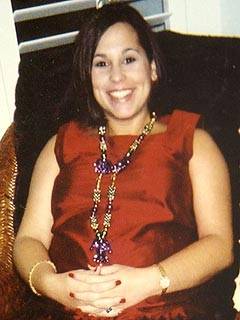 Credit: English Wikipedia·Editorial use·SourceSOLVEDListen
Modesto, California · 2002
Laci Peterson, 27 and eight months pregnant, disappeared from her Modesto, California home on December 24, 2002; her body and that of her unborn son Conner were found in San Francisco Bay in April 2003, and her husband Scott Peterson was convicted in 2004 of murdering both.
 Image record·Editorial use·SourceSOLVEDListen
Austin, Texas · 2022
Moriah Wilson, a 25-year-old professional cyclist, was shot and killed at a friend's residence in Austin, Texas, on May 11, 2022, and Kaitlin Armstrong was later convicted and sentenced to 90 years in prison for the killing.
 Credit: Instagram/@gabspetito, widely distributed in press coverage·Editorial use·SourceSOLVEDListen
Bridger–Teton National Forest, Wyoming · 2021
Gabby Petito, a 22-year-old travel vlogger, was killed by strangulation and blunt-force trauma in August 2021 while on a cross-country van trip with her fiancé, Brian Laundrie. Laundrie returned to Florida alone, was named a person of interest, and later died by suicide, leaving a note admitting he had killed her.
