Case file
Assassination of Ōkubo Toshimichi (Kioichō Incident)
Documents violence — written to inform, not to shock.

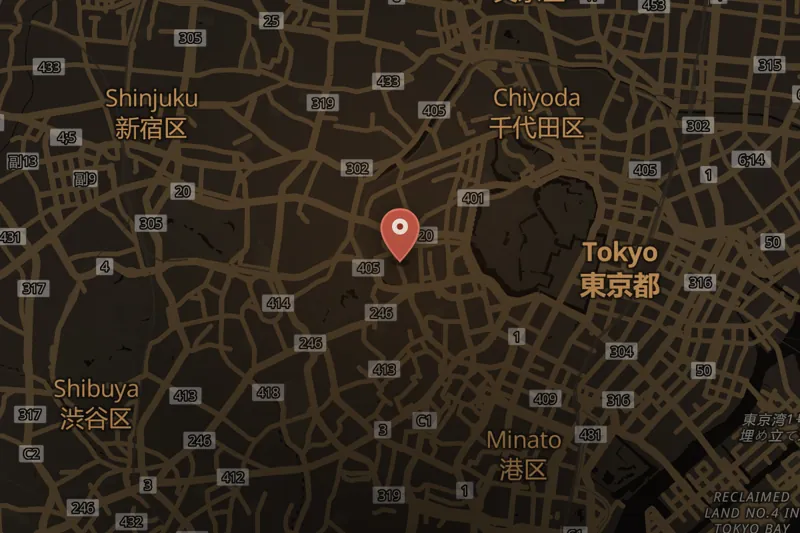
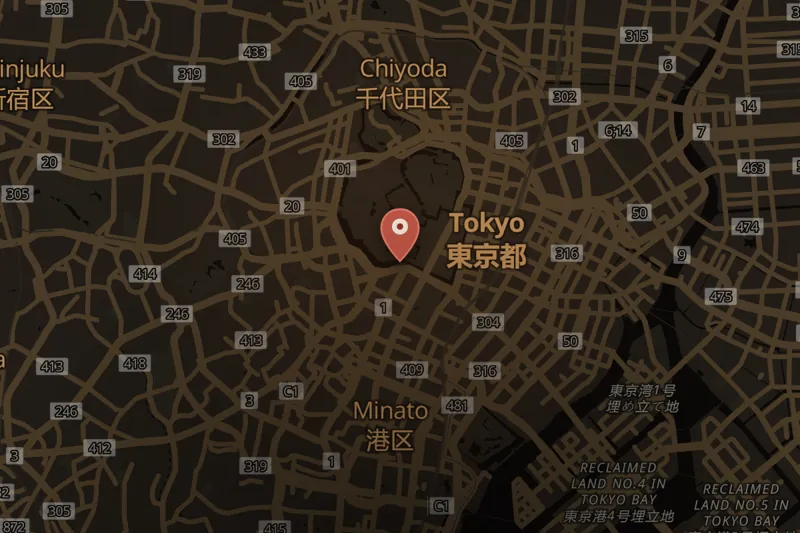
On the morning of May 14, 1878 (Meiji 11), Ōkubo Toshimichi, then Minister of the Interior and one of the most powerful figures in the Meiji government, was traveling by carriage from his residence in Kasumigaseki to the Akasaka Temporary Palace for an audience with Emperor Meiji. At around 8:30 a.m., as the carriage passed through Shimizudani in Kioichō, Kōjimachi-ku, Tokyo, it was attacked by six former samurai. The attackers first assaulted Ōkubo's servant, Yoshimatsu, who escaped and sought help nearby. They then killed the coachman, Nakamura Tarō, who had jumped from the carriage unarmed to confront them. Ōkubo was dragged from the carriage and killed, sustaining sixteen wounds according to a contemporaneous record. The assailants then discarded their swords, bowed to Ōkubo's body, and turned themselves in to authorities the same day, carrying a written manifesto known as the Zankanjō that listed grievances against senior government officials.
The six men involved — Shimada Ichirō, Nagare Tsuyoshi, Sugimoto Otsugiku, Wakita Kōichi, and Sugimura Bunichi, all from Ishikawa Prefecture, and Asai Toshiatsu from Shimane Prefecture — had backgrounds in earlier samurai-led unrest following the Meiji Restoration, including sympathy for the Seikanron debate and involvement in petitions and planning connected to the Satsuma Rebellion. After abandoning plans for an armed uprising, the group turned to a strategy of assassinating high officials. Riku Giyū drafted the Zankanjō at Shimada's request shortly before the attack.
Following the killing, roughly thirty people connected to the plot or its aftermath — including Riku, individuals asked to distribute the manifesto, and people who wrote letters expressing approval of the killing — were arrested in an extensive police investigation. The government classified the six assailants as "political offenders," a category not defined in existing criminal law, and created a Special Court under the Great Court of Cassation to try them. A draft judgment was prepared in July 1878, approved by the Council of State on July 25, and on July 27 the six men were sentenced and executed by beheading the same day. Riku Giyū was sentenced to life imprisonment and was later released in 1889 under a general amnesty.
In the aftermath, Ōkubo, who left significant personal debts due to his practice of funding public projects from his own funds, had his family's finances supported through government-arranged repayment and donations. Security escorts for senior government officials were increased following the incident, and the case is also cited in connection with the later administrative division of Ishikawa Prefecture, from which the assailants originated.

Key facts
- Victims
- Ōkubo Toshimichi, Nakamura Tarō
- Date
- 1878
- Location
- Shimizudani, Kioichō, Chiyoda, Tokyo, Japan
- Case status
- solved
Case timeline
1874
Shimada Ichirō and Nagare Tsuyoshi meet in Tokyo and begin collaborating after earlier petitions related to the Seikanron and Taiwan Expedition failed to produce results.
1877-04
Shimada and Nagare abandon plans for an uprising during the Satsuma Rebellion after government forces enter Kumamoto Castle.
1878-02
Asai Toshiatsu is dismissed from the Metropolitan Police Department's Keishitai unit for violating a prohibition.
1878-03
Asai Toshiatsu learns of Shimada's assassination plot and joins it.
1878-04
Riku Giyū drafts the Zankanjō ('Slay Evil Manifesto') at Shimada's request.
1878-05-14
Ōkubo Toshimichi and his coachman Nakamura Tarō are killed by six assailants at Shimizudani, Kioichō, Tokyo; the assailants surrender the same day.
1878-05-15
Ōkubo is posthumously conferred the rank of Senior Second Rank and the title of Minister of the Right.
1878-05-17
Funerals are held for Ōkubo and Nakamura Tarō.
1878-07-05
Judges appointed by the Minister of Justice prepare a draft judgment for the six assailants.
1878-07-17
The Ministry of Justice submits a request for instructions to the Council of State.
1878-07-25
The Council of State approves the draft judgment.
1878-07-27
The six assailants are sentenced and executed by beheading the same day.
1881
The former Echizen Province area of Ishikawa Prefecture is separated to form Fukui Prefecture.
1883
The former Etchū Province area of Ishikawa Prefecture is separated to form Toyama Prefecture.
1888-05
A memorial stele for Ōkubo is erected, ten years after the incident.
1889
Riku Giyū is released from life imprisonment under a special amnesty granted upon the promulgation of the Meiji Constitution.
1941
Ōkubo's third son donates the carriage used in the assassination to the Goryū Sōryū-in in Kurashiki, Okayama.
Best coverage
No approved coverage links are attached yet.
People
Asai Toshiatsu
CONVICTEDOne of the six assailants, formerly a Metropolitan Police Department constable; sentenced to death and executed by beheading on July 27, 1878.
citation on file
Shimada Ichirō
CONVICTEDCentral figure among the six assailants; sentenced to death and executed by beheading on July 27, 1878.
citation on file
Sugimura Bunichi
CONVICTEDOne of the six assailants; sentenced to death and executed by beheading on July 27, 1878.
citation on file
Riku Giyū
CONVICTEDDrafted the Zankanjō manifesto; sentenced to life imprisonment, released in 1889 under a special amnesty.
citation on file
Ōkubo Toshimichi
VICTIMMinister of the Interior; killed in the attack on May 14, 1878.
citation on file
Kawaji Toshiyoshi
LAW ENFORCEMENTSuperintendent-General of the Metropolitan Police Department at the time of the assassination; submitted a resignation request after the incident, which was rejected.
citation on file
Wakita Kōichi
CONVICTEDOne of the six assailants; renounced samurai status before the attack; sentenced to death and executed by beheading on July 27, 1878.
citation on file
Nagare Tsuyoshi
CONVICTEDOne of the six assailants; sentenced to death and executed by beheading on July 27, 1878.
citation on file
Sugimoto Otsugiku
CONVICTEDOne of the six assailants; sentenced to death and executed by beheading on July 27, 1878.
citation on file
Nakamura Tarō
VICTIMCoachman driving Ōkubo's carriage; stabbed to death after confronting the assailants unarmed.
citation on file
Places
Common questions
- What happened to the victim?
- On May 14, 1878, Ōkubo Toshimichi, Japan's Minister of the Interior, was killed by six former samurai in Kioichō, Tokyo, in an attack that also killed his coachman; all six assailants surrendered the same day and were executed after trial.
- Where did the crime happen?
- Shimizudani, Kioichō, Chiyoda, Tokyo, Japan.
- Who was convicted?
- Asai Toshiatsu (One of the six assailants, formerly a Metropolitan Police Department constable; sentenced to death and executed by beheading on July 27, 1878.), Shimada Ichirō (Central figure among the six assailants; sentenced to death and executed by beheading on July 27, 1878.), Sugimura Bunichi (One of the six assailants; sentenced to death and executed by beheading on July 27, 1878.), Riku Giyū (Drafted the Zankanjō manifesto; sentenced to life imprisonment, released in 1889 under a special amnesty.), Wakita Kōichi (One of the six assailants; renounced samurai status before the attack; sentenced to death and executed by beheading on July 27, 1878.), Nagare Tsuyoshi (One of the six assailants; sentenced to death and executed by beheading on July 27, 1878.), and Sugimoto Otsugiku (One of the six assailants; sentenced to death and executed by beheading on July 27, 1878.).
- What is the current status of the case?
- Status: solved. Last verified July 2026.
Sources
- Kioichō Incidentwikipedia · Wikipedia · 2026-07-07
- Contemporaneous coverage — spacelan.ne.jpnews · spacelan.ne.jp · 2026-07-07
- Contemporaneous coverage — digital.archives.go.jpnews · digital.archives.go.jp · 2026-07-07
Last verified JUL 2026