

Between February and May 1997, a series of violent attacks against children took place in the Suma ward of Kobe, Japan. On 10 February 1997, two twelve-year-old schoolgirls were struck from behind near an apartment complex. On 16 March 1997, ten-year-old Ayaka Yamashita, a fourth-grade student, was bludgeoned near a residential building in Ryugadai; she died the following week. Minutes after that attack, a nine-year-old girl was stabbed outside a nearby park. On 24 May 1997, eleven-year-old Jun Hase, a pupil at Tainohata Elementary School, was lured to a hillside area known as Tank Mountain and strangled with his own shoelaces. His body was hidden in an abandoned television relay station, and the following day his head was severed and mutilated. On 27 May, the head was left in front of the gate of Tomogaoka Junior High School with a handwritten note taunting police and signed with a name read as "Sakakibara Seito."
A follow-up letter, postmarked 3 June and received by the newspaper Kobe Shinbun on 6 June, claimed responsibility for Hase's killing and mutilation, criticized the Japanese educational system and police investigation, and threatened further killings. Investigators initially believed the writer to be an adult male due to the formal language used, and pursued several since-dismissed leads, including reports of unidentified men and vehicles near the crime scenes.
The perpetrator, fourteen-year-old Shinichiro Azuma, was questioned by police on 28 June 1997 and confessed after officers said his handwriting had been matched to the letters. He admitted to killing both Hase and Yamashita, as well as carrying out three additional non-fatal attacks on schoolgirls. He was arrested for murder and abandonment of a corpse, and weapons linked to the crimes were recovered from a pond on 7 July. He was indicted for the assaults on 16 July 1997.
As a juvenile, Azuma was tried at Kobe Family Court beginning 4 August 1997 under the designation "Boy A," since Japanese law bars publication of a minor offender's identity. Psychiatric evaluation found no significant impairment of responsibility, though it identified conduct disorder and traits including sexual sadism and a lack of empathy. On 13 October 1997, Judge Igaki Yasuhiro ordered Azuma's indefinite detention at the Kanto Medical Juvenile Training School. A 1999 civil settlement saw Yamashita's family awarded 80,000,000 yen in compensation. Azuma was transferred to another juvenile facility in 2001 and, following a period of good rehabilitative assessment, was granted a provisional release announced by the Ministry of Justice on 11 March 2004, with full release following on 1 January 2005.
The case prompted public debate in Japan over youth crime, media restrictions, and juvenile justice, including a 2000 legislative change lowering the age of criminal responsibility from 16 to 14. In June 2015, Azuma published an autobiography, Zekka, describing the killings in detail and stating regret, prompting renewed controversy and objections from Hase's family.
Key facts
- Victims
- Jun Hase, Ayaka Yamashita
- Date
- 1997
- Location
- Suma, Kobe, Japan
- Case status
- solved
Case timeline
1997-02-10
Two twelve-year-old schoolgirls are struck from behind near an apartment complex in Nakaochiai district, Kobe.
1997-03-16
Ayaka Yamashita is bludgeoned near a residential building in Ryugadai; a second girl is stabbed shortly afterward near Tatsugaoka Park.
1997-03-23
Ayaka Yamashita is declared brain dead and dies from her injuries.
1997-05-24
Jun Hase is abducted and strangled at Tank Mountain, Taihata, Kobe.
1997-05-25
Hase's body is decapitated and further mutilated at an abandoned relay station.
1997-05-27
Hase's severed head is left in front of Tomogaoka Junior High School with a taunting note.
1997-06-06
A letter claiming responsibility for the murders, signed 'Sakakibara Seito,' is received by the newspaper Kobe Shinbun.
1997-06-28
Shinichiro Azuma is questioned by police and confesses to the murders of Hase and Yamashita and three other attacks; he is arrested.
1997-07-07
Weapons used in the murders and assaults are recovered from Mukaihata pond.
1997-07-16
Azuma is officially indicted for the assaults.
1997-08-04
Azuma's trial begins at Kobe Family Court.
1997-10-13
Judge Igaki Yasuhiro orders Azuma's indefinite detention at the Kanto Medical Juvenile Training School.
1999
An out-of-court settlement is reached in a civil suit by Yamashita's family, awarding 80,000,000 yen in compensation.
2001-11
Azuma is transferred to Tohoku Juvenile Training School.
2004-03-11
The Ministry of Justice announces Azuma's provisional release.
2005-01-01
Azuma's full release from juvenile detention takes effect.
2015-06
Azuma publishes an autobiography, Zekka, describing the murders.
Best coverage
No approved coverage links are attached yet.
People
Jun Hase
VICTIMEleven-year-old special education pupil abducted, strangled, and mutilated on 24-25 May 1997.
Ayaka Yamashita
VICTIMTen-year-old elementary school student fatally injured in an assault on 16 March 1997; died 23 March 1997.
Shinichiro Azuma
CONVICTEDProsecuted as a juvenile ('Boy A') and found responsible by Kobe Family Court for the murders of Ayaka Yamashita and Jun Hase and additional assaults on schoolgirls; ordered into indefinite juvenile detention on 13 October 1997.
Roles reflect public records and court outcomes at the time of writing — supporting citations are on file under Sources.
Places
Common questions
- What happened to the victim?
- In 1997, in Suma, Kobe, Japan, fourteen-year-old Shinichiro Azuma murdered ten-year-old Ayaka Yamashita and eleven-year-old Jun Hase, decapitating the latter and leaving his head at a school with a taunting note signed "Seito Sakakibara."
- Where did the murders happen?
- Suma, Kobe, Japan.
- Who was convicted?
- Shinichiro Azuma (Prosecuted as a juvenile ('Boy A') and found responsible by Kobe Family Court for the murders of Ayaka Yamashita and Jun Hase and additional assaults on schoolgirls; ordered into indefinite juvenile detention on 13 October 1997.).
- What is the current status of the case?
- Status: solved.
Related cases
View all cases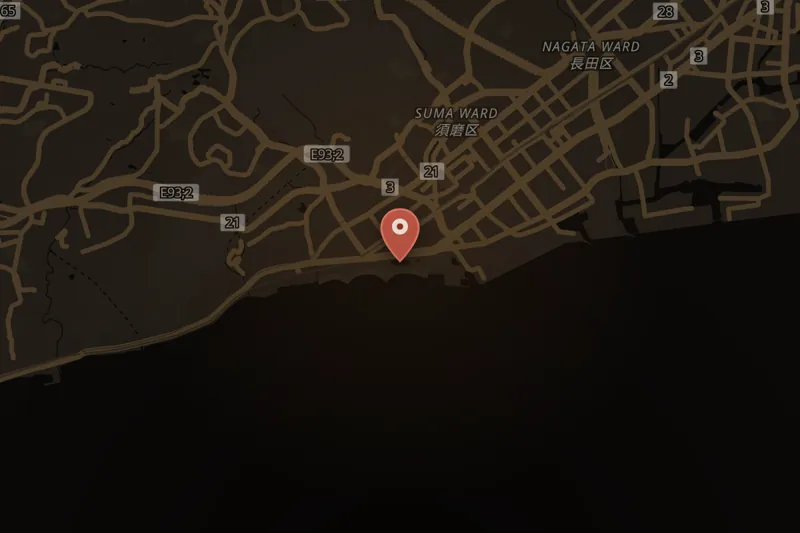
Murders of Jun Hase and Ayaka Yamashita
Suma Ward, Kobe, Hyogo Prefecture, Japan

2021 Osaka Building Fire
Dojima Kita Building, Kita-ku, Osaka, Japan

Osaka movie theatre fire
Nanba, Osaka, Japan

Robin Hood Hills murders
Robin Hood Hills, West Memphis, Arkansas

Snowtown murders
Snowtown, South Australia

Killings of Julie Lejeune, Mélissa Russo, An Marchal and Eefje Lambrecks
Marcinelle, Charleroi, Belgium
Sources
- Kobe child murderswikipedia · Wikipedia · 2026-07-07
- Contemporaneous coverage of the Kobe child murders casenews · The Japan Times · 2026-07-07
- Contemporaneous coverage of the Kobe child murders casenews · The Japan Times · 2026-07-07