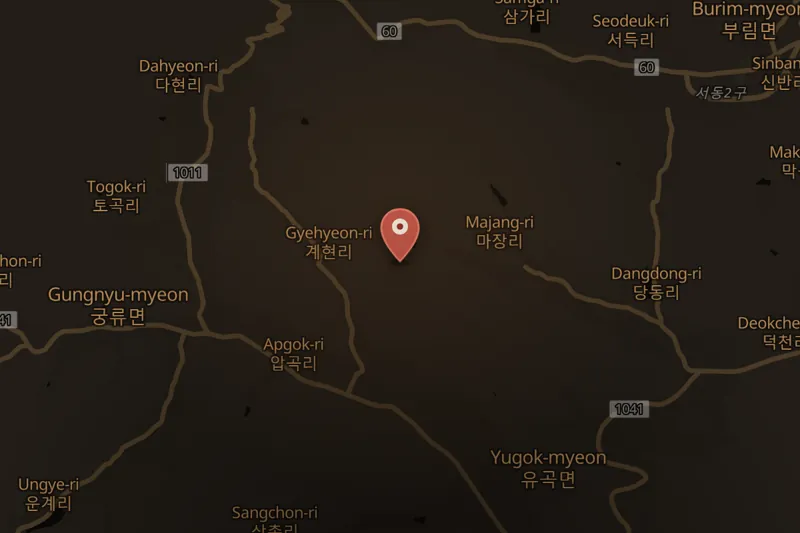
On 24 December 1949, members of the 2nd and 3rd platoon, 7th company, 3rd battalion, 25th Infantry Regiment, 3rd Infantry Division of the South Korean Army killed between 86 and 88 unarmed civilians in Mungyeong, a district in North Gyeongsang Province, South Korea. A majority of the victims were children and elderly people, with 32 children among the dead. The victims were killed on the suspicion that they were communist supporters or collaborators.
For decades following the killings, the South Korean government publicly attributed the massacre to communist guerrillas rather than to its own armed forces, a characterization that stood unchallenged in official accounts for many years.
On 26 June 2006, the Truth and Reconciliation Commission of South Korea concluded that the massacre had in fact been committed by the South Korean army, rather than by communist guerrillas as previously claimed. This finding reversed the government's long-standing official narrative about responsibility for the deaths.
Despite the Commission's conclusion, victims' families faced legal obstacles in seeking accountability. A South Korean local court ruled that any effort to charge the South Korean government with the massacre was barred by the statute of limitations, since the five-year prescription period had ended in December 1954. On 10 February 2009, the South Korean high court likewise dismissed a complaint brought by victims' families, upholding the limitations-based barrier to their claims.
The legal landscape shifted in June 2011, when the South Korean supreme court determined that the South Korean government should compensate victims of the crimes it had committed, regardless of the previously applied deadline for making such claims. This decision opened a path for redress that had been foreclosed by the earlier lower and high court rulings.
The Mungyeong massacre is cited alongside other episodes of state violence against civilians in South Korea during this period, including the Bodo League massacre and the Jeju uprising, and is included among the broader List of massacres in South Korea.


 SOLVEDListen