
Start here
A Police Officer Killed 56 People in One Night | Woo Bum-kon
The creator's telling of the case, the strongest entry point on file.
Watch on YouTubeBefore you continue
This case involves crimes against children. Casepin presents the record in neutral, non-graphic language. Choose whether to continue.
Solved case · 1978
Also known as Uiryeong shooting incident · Officer Woo incident
The short answer
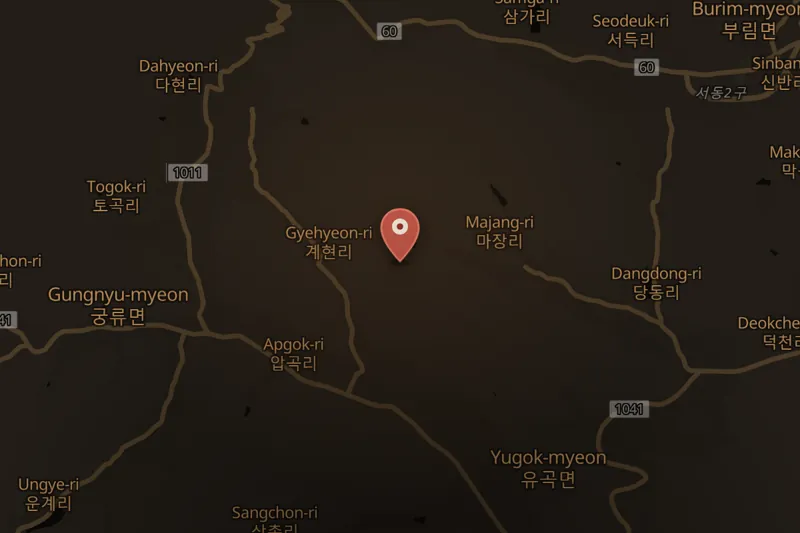
On the night of April 26–27, 1982, South Korean policeman Woo Bum-kon killed 56 people and wounded around 35 others across four villages in Uiryeong County using stolen rifles and grenades before killing himself and three hostages in a suicide bombing.
Start hereA Police Officer Killed 56 People in One Night | Woo Bum-konThe coverage index
5 pieces from 5 creators: ranked, with duplicates removed and short clips set aside.
Start here
Video · YouTube · 2026
The creator's telling of the case, the strongest entry point on file.
Watch on YouTubeThe Woo Bum-kon (우범곤) Shooting Rampage in South Korea (April 27, 1982)


This Policeman Killed 57 People in 1 Night | The Case of Woo Bum-kon

Titles and descriptions are the creators’ own and may not reflect current legal status. The sourced facts are in the file below. Players load only when you press play. Suggest coverage we’re missing.
The case file
The Woo Bum-kon incident was a spree killing carried out overnight from April 26 to April 27, 1982, in Uiryeong County, South Gyeongsang Province, South Korea. Policeman Woo Bum-kon murdered 56 people and wounded approximately 35 others across four villages using two stolen M2 carbines, ammunition, and hand grenades taken from a reservists' armory. Woo died by suicide bombing, detonating grenades strapped to his chest while holding hostages, killing himself and three of them before police could respond.
Woo, born November 5, 1955, in Busan, had served in the Marines and joined the National Police in Busan in December 1980. After a stint guarding the Blue House, he was informally demoted over complaints about drinking and temper and reassigned to Gungnyu myeon in Uiryeong County. There he lived with a local woman, Chun Mal-soon, whose family opposed their relationship. On the afternoon of April 26, 1982, an argument with Chun preceded his reporting for duty; that evening he returned home, assaulted Chun, and then took weapons from the local armory, reportedly gaining access after other officers left their posts to visit a hot spring.
Beginning around 9:30 p.m., Woo moved through the villages of Togok, Apgok, Ungye, and Pyeongchon, shooting residents, taking a hostage he later killed, attacking a shopkeeper's family, and opening fire on mourners at a funeral wake. Police were alerted within minutes but took roughly an hour to assemble a search team, and Seoul's national police headquarters was not informed until 1:40 a.m. Around 3:40 a.m., Woo, having taken refuge and hostages in a farmhouse, detonated two grenades, killing himself and three hostages; the homeowner survived with serious injuries.
Death tolls varied across sources, with some South Korean reporting suggesting the toll rose as high as 73 after additional victims died of their injuries, though official figures cite 56 dead and around 35 wounded. Victims ranged in age from a one-week-old infant to a woman in her seventies. Initial local police attributed the rampage to Woo's intoxicated anger following his argument with Chun, but a later review by the Incident Cause Investigation Unit concluded the motive was dissatisfaction over his demotion.
The government under President Chun Doo-hwan restricted early reporting on the incident. In its aftermath, Interior Minister Suh Chung-hwa and the national police chief offered to resign, with Suh's resignation accepted and Roh Tae-woo appointed as his successor. A parliamentary team was formed to investigate the police response, and four officers who had left their posts were arrested for negligence. In 2024, following years of petitioning led by a victim's father, the "Uiryeong 4.26 Memorial Park" was opened on the 42nd anniversary of the attack.
16 dated entries · 1955–2024
Woo Bum-kon is born in Choryang, Dong District, Busan.
Woo is discharged from the Marines.
Woo joins the National Police in Busan.
Woo begins special duty guarding the Blue House.
Woo's Blue House assignment ends; he is later informally demoted and stationed in Uiryeong County.
The Chun government launches the National Movement for Consciousness Reform.
Woo argues with girlfriend Chun Mal-soon, reports for duty, later returns home, assaults Chun, and takes weapons from the reservists' armory.
Overnight rampage continues through Togok, Apgok, Ungye, and Pyeongchon; Woo detonates grenades around 3:40 a.m., killing himself and three hostages.
News reports on the incident begin in the evening.
Interior Minister Suh Chung-hwa resigns; Roh Tae-woo is appointed Interior Minister.
A child mortally wounded in the attack dies from injuries.
Reports emerge that director Na Hong-jin is considering a film adaptation of the killings.
A memorial petition is launched by Jeon Byeong-tae, whose son was killed in the incident.
A committee finalizes the design of the memorial park.
The main monument design for the memorial is finalized.
The Uiryeong 4.26 Memorial Park is officially opened on the 42nd anniversary of the attack.
3 named in this file
Victims first. Every legal label is set from public records and court outcomes, not from the prose.
3 cited
Coverage is not a source: every fact in this file rests on the records below.
Official / agencypaperspast.natlib.govt.nzAccessed Jul 7, 2026
PressThe New York TimesAccessed Jul 7, 2026
EncyclopedicWikipediaAccessed Jul 7, 2026
Trust
Are you family of someone named in this file? Corrections and removal requests from victims’ families are prioritized.
Near this case
 SOLVEDListen
Hill 303, near Waegwan, South Korea · 1950s
On August 17, 1950, North Korean People's Army (KPA) troops shot 41 captured United States Army soldiers on Hill 303 near Waegwan, South Korea, during the Battle of Pusan Perimeter, after a KPA officer ordered the prisoners killed as his forces retreated under a UN counterattack.
 SOLVEDListen
Mungyeong, North Gyeongsang Province, South Korea · 1940s
On 24 December 1949, soldiers of the South Korean Army killed 86 to 88 unarmed civilians, including 32 children, in Mungyeong, North Gyeongsang Province, later attributed by the government to communist guerrillas for decades until a 2006 state commission found the army responsible.
 Credit: US Army·Public domain·SourceUNSOLVEDListen
Mountain above Tuman (Duman-ri), Geumnam-myeon, Sejong City, South Korea · 1950s
On July 16, 1950, during the Battle of the Kum River, Korean People's Army (KPA) troops killed an unarmed U.S. Army chaplain and thirty critically wounded, unarmed American soldiers left in his and a medic's care on a mountain near the village of Tuman, South Korea.
 Credit: Unknown author·CC BY-SA 4.0·SourceSOLVEDListen
55 Atocha Street, central Madrid · 1977
Five labour activists were killed and four gravely wounded when right-wing gunmen attacked a workers' legal office on Atocha Street in Madrid on 24 January 1977; the main perpetrators were later convicted.
 Credit: Unknown author·Public domain·SourceSOLVEDListen
Grover Cleveland Elementary School, San Diego, California · 1979
On January 29, 1979, a 16-year-old girl opened fire from her home on children and staff at Grover Cleveland Elementary School in San Diego, killing the principal and a custodian and wounding eight children and a police officer.
 Credit: Dean Molyneaux·CC BY-SA 2.0·SourceUNSOLVEDListen
Whitecross and Ballydougan, County Armagh, Northern Ireland · 1976
On 4 January 1976, loyalist gunmen shot seven Irish Catholic civilians in two attacks on the Reavey family home in Whitecross and the O'Dowd family home in Ballydougan, County Armagh, killing six outright and fatally wounding a seventh.