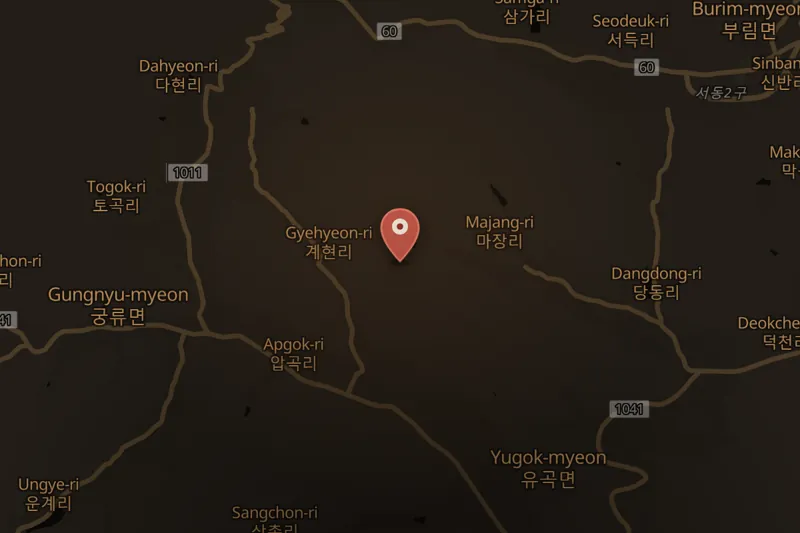
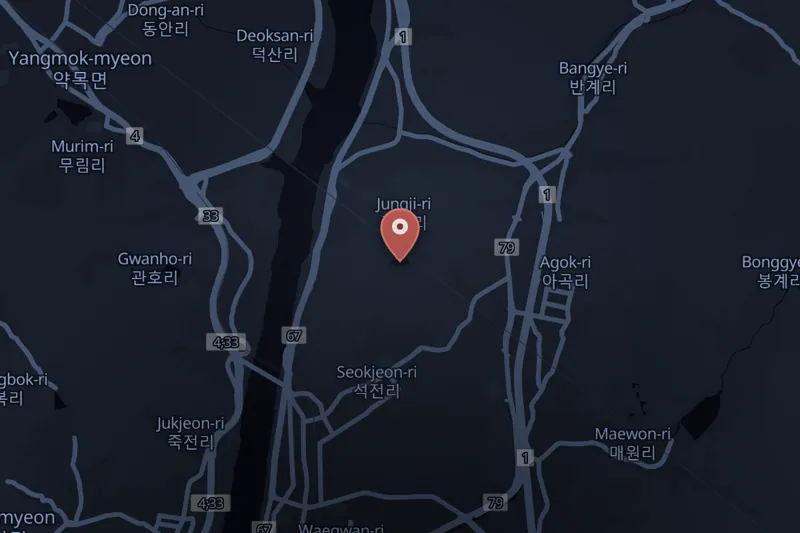
In the opening weeks of the Korean War, elements of the US 1st Cavalry Division's 5th Cavalry Regiment held defensive positions along the Nakdong River near Waegwan, South Korea, as part of the Pusan Perimeter defense. On August 15, 1950, KPA forces crossed the Nakdong and surrounded G Company and a supporting mortar platoon of H Company on Hill 303, a strategically important terrain feature overlooking Waegwan and key river crossings. Some US troops escaped, but the mortar platoon, misidentifying advancing KPA troops as expected South Korean reinforcements, was surrounded and surrendered without a fight under orders from its platoon leader, Lieutenant Jack Hudspeth. Estimates of the number of Americans captured range from 31 to 42; they were taken by the KPA's 4th Company, 2nd Battalion, 206th Mechanized Infantry Regiment, 105th Armored Division.
Over the following two days, the prisoners were held with limited food and water, moved between locations under KPA guard, and were unable to be evacuated across the Nakdong due to US artillery fire on crossing points. During this period, two American officers—Lieutenant Hudspeth and Lieutenant Cecil Newman—attempted to escape at night but were recaptured and executed. By August 17, additional captured Americans had been added to the group, bringing the total held in a gully on Hill 303 to 45.
On the afternoon of August 17, as UN forces launched an air strike and ground assault to retake Hill 303, a KPA officer determined the unit could not continue holding the prisoners while retreating and ordered them shot. KPA guards fired into the group of prisoners in the gully; accounts vary as to whether all or most of roughly 50 guards participated or whether a smaller group of about 14 guards under noncommissioned officers carried out the shooting. Guards returned afterward to shoot survivors of the initial gunfire. Only four or five men survived by hiding beneath the bodies of the dead. In total, 41 US prisoners were killed, including 26 from the mortar platoon. US forces retook the hill later that day and discovered the bodies, with hands still bound.
The massacre prompted UN commander General Douglas MacArthur to broadcast warnings to North Korean commanders on August 20, 1950, threatening to hold senior KPA leaders criminally accountable for war crimes. Captured KPA documents from around the same period show internal concern among North Korean commanders about troops' treatment of prisoners. The event was investigated by the US Senate in the early 1950s as part of a broader review of alleged Korean War atrocities. The site on Hill 303, near the later US Army installation Camp Carroll, has since been marked with memorials, with a larger monument installed in 2010 ahead of the massacre's 60th anniversary.

Key facts
- Victims
- Roy Manring, Jack Hudspeth, James Rudd, Roy L. Day Jr., Fred Ryan, Cecil Newman
- Date
- 1950
- Location
- Hill 303, near Waegwan, South Korea
- Case status
- solved
Case timeline
1950-06-25
North Korea invades South Korea, beginning the Korean War.
1950-07-05
Task Force Smith is defeated by KPA forces in the Battle of Osan, the first US-KPA engagement of the war.
1950-08-14
A KPA regiment crosses the Nakdong River north of Waegwan into the ROK 1st Division sector.
1950-08-15
KPA forces surround G Company and a supporting H Company mortar platoon on Hill 303; the mortar platoon surrenders after misidentifying KPA troops as ROK reinforcements.
1950-08-16
Prisoners are moved by their KPA guards; a KPA lieutenant is overheard saying prisoners would be killed if US forces advanced too close.
1950-08-17
KPA guards execute 41 US prisoners in a gully on Hill 303 as UN forces retake the hill following an air strike and ground assault.
1950-08-18
US troops find the bodies of six executed US tank crew members near Waegwan, killed in a similar manner.
1950-08-20
General Douglas MacArthur broadcasts a warning to North Korean commanders, denouncing the atrocity and threatening accountability.
1953
The US Senate Committee on Government Operations, led by Joseph McCarthy, investigates the Hill 303 massacre among reported Korean War atrocities.
1990
An original memorial for the executed POWs is placed in front of the Camp Carroll garrison headquarters.
1999
Surviving POWs Fred Ryan and Roy Manring attend a memorial ceremony at the execution site on Hill 303.
2003-08-17
The original memorial is placed on Hill 303 itself.
2010-05-26
A larger memorial is flown by helicopter to the top of Hill 303 ahead of the massacre's 60th anniversary.
Best coverage
No approved coverage links are attached yet.
People
Roy Manring
VICTIMUS Army private and survivor of the Hill 303 executions; later gave testimony about the massacre and attended memorial ceremonies at the site.
Jack Hudspeth
VICTIMUS Army lieutenant and mortar platoon leader who ordered his troops to surrender; later attempted to escape captivity and was recaptured and executed by KPA forces.
James Rudd
VICTIMUS Army soldier and survivor of the Hill 303 executions; long denied VA compensation for injuries incurred during the execution.
Roy L. Day Jr.
VICTIMUS Army corporal held prisoner on Hill 303 who spoke Japanese and overheard a KPA lieutenant discuss killing the prisoners.
Fred Ryan
VICTIMUS Army private and survivor of the Hill 303 executions; later gave testimony about the massacre and attended memorial ceremonies at the site.
Cecil Newman
VICTIMUS Army lieutenant and forward artillery observer who attempted to escape captivity with Lieutenant Hudspeth and was recaptured and executed by KPA forces.
Roles reflect public records and court outcomes at the time of writing — supporting citations are on file under Sources.
Places
Common questions
- What happened to the victim?
- On August 17, 1950, North Korean People's Army (KPA) troops shot 41 captured United States Army soldiers on Hill 303 near Waegwan, South Korea, during the Battle of Pusan Perimeter, after a KPA officer ordered the prisoners killed as his forces retreated under a UN counterattack.
- Where did the massacre happen?
- Hill 303, near Waegwan, South Korea.
- What is the current status of the case?
- Status: solved.
Sources
- ENCYCLOPEDICHill 303 massacreWikipedia · 2026-07-10
- PRESSContemporaneous coverage — TIMETIME · 2026-07-10
- OFFICIAL / AGENCYContemporaneous coverage — loc.govloc.gov · 2026-07-10
Record history
- First published
- JUL 11, 2026