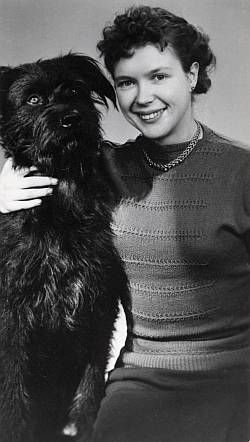
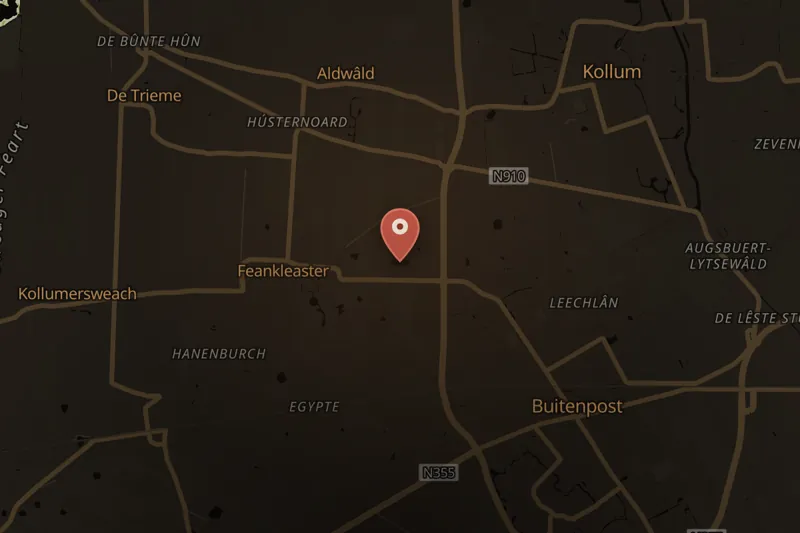
Marianne Vaatstra, 16, was last seen cycling from Kollum toward her parents' home in De Westereen (formerly Zwaagwesteinde) on the night of 30 April–1 May 1999. Her body was found the next day in a field near Feankleaster with her throat slit; forensic examiners recovered traces of the perpetrator's blood and semen at the scene, along with a cigarette lighter bought locally that also carried the killer's DNA (Source 1).
In the immediate aftermath, local suspicion focused on residents of a nearby asylum seekers' center. Security at the center was increased and riot police were placed on standby amid tension between locals and refugees. In October 1999, a municipal meeting about a new center in the town descended into rioting, and one woman who had incited the unrest was later convicted of a racist offence. A 32-year-old man from De Westereen was arrested in late May 1999 but released after his DNA did not match evidence from the scene; he was the first of twelve suspects arrested and subsequently released over the course of the investigation. An Iraqi refugee who had left the asylum center on the night of the murder was tracked by Interpol and arrested in Istanbul in October 1999 amid controversy over alleged political pressure on the arrest; he was later cleared by DNA evidence (Source 1).
Police conducted a DNA sweep beginning in December 1999 covering 170 men in the area, of whom 162 cooperated, without producing a match. Investigators later issued a psychological profile suggesting the perpetrator was a white, Western European man living within 15 km of the crime scene. The case was closed, reopened in 2002 for about a year, and closed again. Over the following years, members of parliament Hilbrand Nawijn (2006) and Fred Teeven (2007, 2010) publicly raised questions about the stalled investigation, and the television program hosted by crime reporter Peter R. de Vries also examined the case (Source 1).
The investigation was reopened on a larger scale on 29 September 2012, when police began a voluntary DNA sweep of roughly 8,000 men within a 5 km radius of the crime scene, screening for a Y-chromosome profile matching the perpetrator's. This produced a match, leading to the arrest of Jasper Steringa, a 45-year-old farmer from Aldwâld — about 2.5 km from the crime scene — on 18 November 2012. Steringa confessed to his lawyer within minutes of their first meeting and formally confessed to the murder on 6 December 2012 (Source 1).
At trial in Leeuwarden, which opened 28 March 2013, Steringa described forcing Vaatstra into the field with a knife, raping her, strangling her with her own bra, and cutting her throat. He told the court he had withheld a confession for years to protect his family, including two children who were five and eight years old at the time of the murder. Prosecutors sought a 20-year sentence; on 19 April 2013, the court sentenced Steringa to 18 years in prison for the rape and murder (Source 1).
Subsequent controversies included a 2013 Machiavelli Prize awarded to Vaatstra's father Bauke Vaatstra for advancing DNA-profiling investigative methods, a complaint against him over alleged 1999 death threats (which he denied and which was not investigated due to expiration of the statute of limitations), a lawsuit by Vaatstra's mother against an author over her diaries, and the prosecution of a conspiracy theorist for threatening Steringa's defense lawyer (Source 1).


 SOLVEDListen