Case file
Kinomoto Incident
Documents violence · ongoing investigation — written to inform, not to shock.

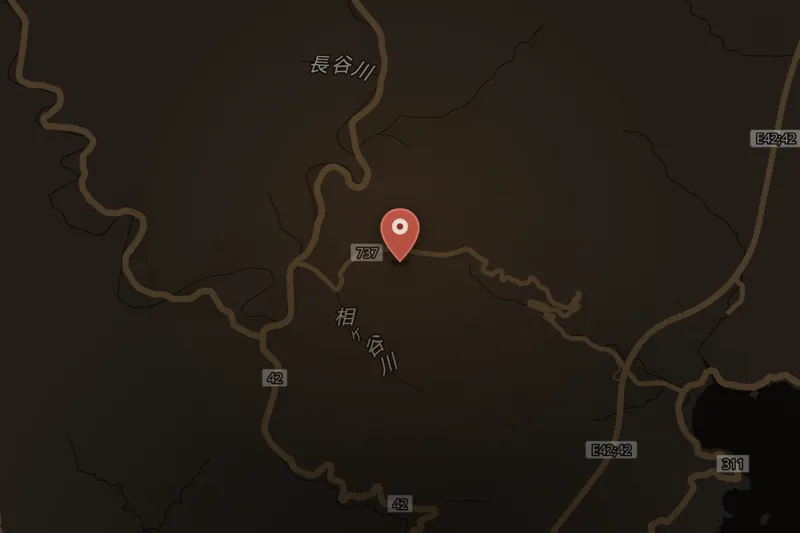
In January 1926, dozens of Korean laborers were working alongside Japanese workers on a tunnel construction project in Kinomoto-chō, Minamimuro District, Mie Prefecture, in the Empire of Japan. On January 2, an altercation broke out at a local movie theater when a Japanese man, reportedly drunk, drew a sword and severely wounded a Korean man during an argument. The following day, a group of Koreans was seen gathering at a local shrine, and a rumor spread among Japanese townspeople that they intended to retaliate using dynamite taken from the tunnel construction site.
At the request of local police, members of a military association, a youth group, and firefighters armed themselves with bamboo spears and hunting rifles and moved into areas where Korean workers were staying. In the chaos, some Japanese workers were mistaken for Koreans and also attacked. Around 5 p.m., Yi Kiyun, aged 25, reportedly ran away from the tunnel where his family and other workers were sheltering, apparently to draw attackers away and allow others to escape. He was unarmed, was surrounded, and was shot in the head in the street. Dozens of Koreans fled into the surrounding mountains. After dark, the armed group regrouped and pursued them; the Koreans reportedly used dynamite in a counterattack, but the pursuers continued shooting. Around 7 p.m., Pae Sangdo, aged 29, also unarmed, was killed. One victim was speared in the head and his body dragged through the town center; both bodies were left in the street for three days before being placed, covered with straw mats, in the graveyard of the local temple Gokuraku-ji, where they were eventually buried under created Buddhist posthumous names.
In the aftermath, the attackers told police the Koreans had been unruly and had stolen food and goods, and several were commended by police for assisting the investigation with no punishment. Roughly 50 Koreans were arrested and interrogated by January 6; 20 were charged with sedition, and 30 more were sent to Toba. Japanese attackers began to be arrested from January 10. Ultimately 15 Koreans and 17 Japanese people stood trial, with Japanese lawyer Tatsuji Fuse, known for defending Koreans in Japan, representing the Korean defendants. On October 30, 1926, the court sentenced several Korean defendants to prison terms ranging from one and a half to three years, while other Koreans were released. Several Japanese defendants received two years in prison, and others received six-month sentences with probation. All Koreans involved, regardless of conviction, were dismissed from work and expelled from the area, while local organizations paid for the Japanese defendants' living and legal expenses.
The incident drew condemnation from Koreans in Japan and Korea and prompted calls in Korean newspapers for labor and civil rights protections. It was largely forgotten until a local civic group began advocating for a memorial in the late 1980s; a memorial with replacement tombstones bearing the victims' Korean names was completed in 1994. <parameter name="timeline">[{"date": "1926-01-02", "event": "A Korean man and a drunk Japanese man argue at a local movie theater in Kinomoto-chō; the Japanese man draws a sword and severely wounds the Korean man."}, {"date": "1926-01-03", "event": "A rumor spreads that a group of Koreans seen at a local shrine intend to attack with dynamite; armed Japanese groups, at police request, attack Korean workers. Yi Kiyun and Pae Sangdo are killed."}, {"date": "1926-01-06", "event": "Attackers and police complete initial coordinated arrests and interrogations of around 50 Koreans."}, {"date": "1926-01-07", "event": "Twenty Koreans are charged with sedition and undergo a preliminary hearing; 30 others are sent to Toba for further processing."}, {"date": "1926-01-10", "event": "Arrests of Japanese attackers begin, continuing for two days."}, {"date": "1926-05-03", "event": "Preliminary hearing concludes."}, {"date": "1926-10-30", "event": "Court announces verdicts, sentencing several Korean and Japanese defendants to prison terms."}, {"date": "1994-11-20", "event": "A memorial with replacement tombstones bearing the victims' Korean names is completed at Gokuraku-ji temple."}]

Key facts
- Victims
- Yi Kiyun, Pae Sangdo
- Date
- 1926
- Location
- Kinomoto-chō, Minamimuro District, Mie Prefecture, Japan
- Case status
- solved
Case timeline
No timeline entries are attached yet.
Best coverage
No approved coverage links are attached yet.
People
Yi Kiyun
VICTIMKorean tunnel worker, aged 25, unarmed, shot in the head after reportedly drawing attackers away from other Koreans; killed January 3, 1926.
citation on file
Kim Myŏng-ku
CONVICTEDSentenced to three years in prison on October 30, 1926.
citation on file
Yun Chŏng-chin
CONVICTEDSentenced to two years in prison on October 30, 1926.
citation on file
Michihara Sōshi
CONVICTEDJapanese defendant sentenced to two years in prison on October 30, 1926, along with three others.
citation on file
Yi To-sul
CONVICTEDSentenced to one year and six months in prison on October 30, 1926.
citation on file
Yu Sang-pŏm
CONVICTEDSentenced to one year and six months in prison on October 30, 1926.
citation on file
Pae Sangdo
VICTIMKorean tunnel worker, aged 29, unarmed, killed by gunfire on January 3, 1926.
citation on file
Places
Common questions
- What happened to the victim?
- On January 3, 1926, in Kinomoto-chō, Mie Prefecture, Japanese residents armed with bamboo spears and hunting rifles killed two ethnic Korean tunnel workers, Yi Kiyun and Pae Sangdo, after a rumor spread that Koreans were planning a revenge attack with dynamite.
- Where did the crime happen?
- Kinomoto-chō, Minamimuro District, Mie Prefecture, Japan.
- Who was convicted?
- Kim Myŏng-ku (Sentenced to three years in prison on October 30, 1926.), Yun Chŏng-chin (Sentenced to two years in prison on October 30, 1926.), Michihara Sōshi (Japanese defendant sentenced to two years in prison on October 30, 1926, along with three others.), Yi To-sul (Sentenced to one year and six months in prison on October 30, 1926.), and Yu Sang-pŏm (Sentenced to one year and six months in prison on October 30, 1926.).
- What is the current status of the case?
- Status: solved. Last verified July 2026.
Sources
- Kinomoto Incidentwikipedia · Wikipedia · 2026-07-07
- Contemporaneous coverage — nagoyatv.comnews · nagoyatv.com · 2026-07-07
- Contemporaneous coverage — monthly.chosun.comnews · monthly.chosun.com · 2026-07-07
Last verified JUL 2026